THE BETTER
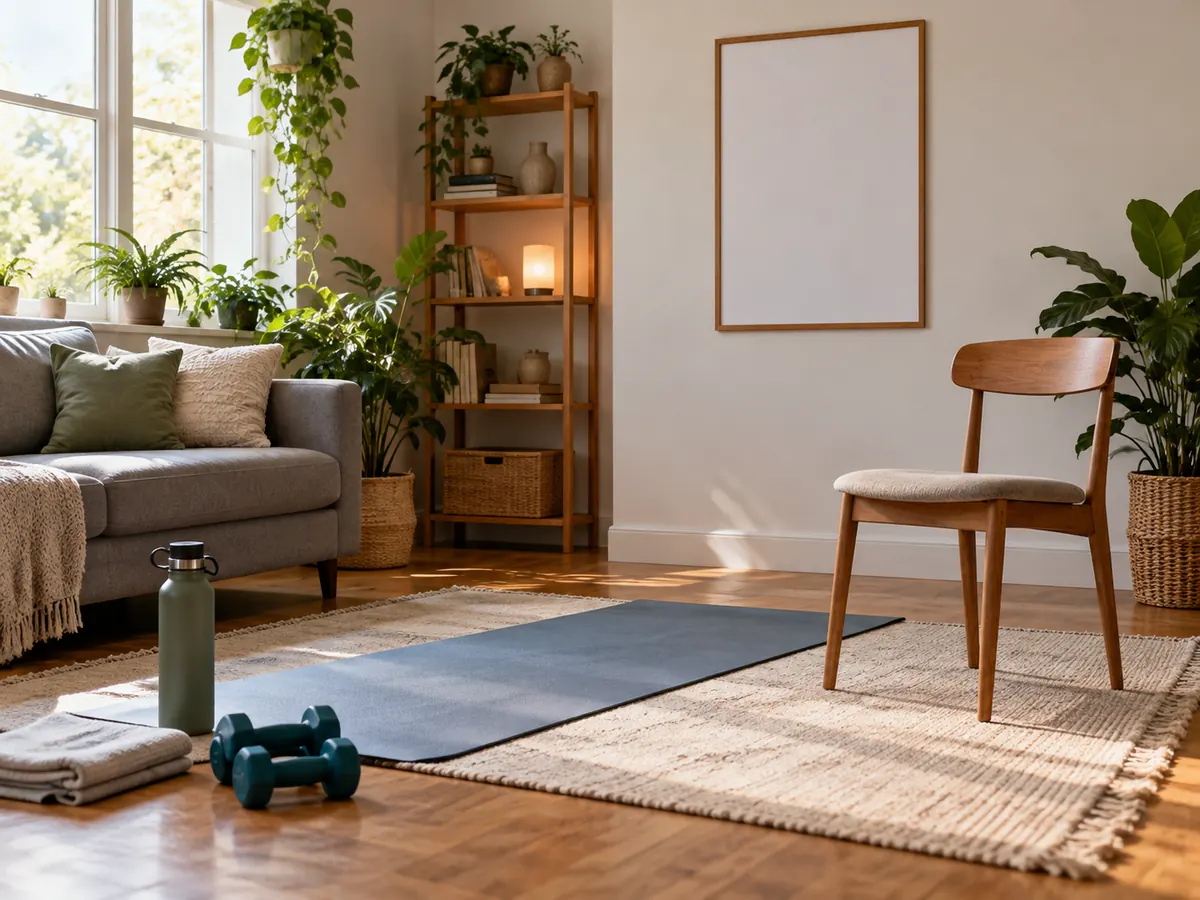
A spare room is not required to use a printable workout, but a small space should be arranged deliberately. Look at the movement before moving furniture; a seated arm reach needs a different footprint from a walking drill.
Map the movement, not just the mat
Read the page and notice which direction the body moves. If the illustration shows side steps, arm circles or a turn, the clear area needs to include that path. Move cords, bags and low tables out of the way rather than planning to avoid them mid-movement.
Place a chart where it can be read without twisting the body to find it. Tape can hold a lightweight paper page; a tablet stand can bring a screen closer to eye level. If you use a chair, make sure it stays steady on the floor you actually have.
Consider light and sound
A bright window behind a screen can make labels hard to see. Printed pages may be easier in that spot, provided the text is large enough. If a product video helps you understand the page sequence, preview it before the activity so you do not have to handle a device while trying a new movement.
Good lighting also makes the room and support surfaces easier to see. A quiet space can help with reading instructions, but do not depend on audio cues alone if you will play a silent, automatically looping video.

Leave a pause point
Set the page or device where you can stop to re-read it. A workout chart should not make you rush to catch the next pictured step. If a move needs more space than you have, skip that routine and choose one with a compatible setup rather than improvising around obstacles.
If you are managing a condition or worried about falls, discuss appropriate movement with a professional. A tidy room reduces some practical hazards, but it cannot establish whether an exercise is suitable for an individual.
Measure the movement, not just the room
A small room can support some activities comfortably, but the relevant measurement is the space each movement needs. Look at the actual sequence before moving furniture. A seated routine may require room for arms and legs; a standing step may need clear space to each side.
Check what happens when a door opens, a drawer slides or another person passes through. Move cords, unstable rugs and clutter out of the immediate area. The exercise chart should be visible without forcing you to twist to read tiny labels during a movement.
A room setup cannot guarantee safety. If balance, pain or a medical condition affects how you move, seek personalized guidance. The purpose of this checklist is to make the environment easier to inspect before an activity, not certify that any specific routine is appropriate.

Set up one useful station
Choose where the instructions will sit: on a wall, on a tablet stand or on a nearby desk. Test the view from the position in which you will read them. A chart may look clear at your desk and become illegible across the room.
Keep only the items needed for the session within reach. A stable chair, water or a support surface may be relevant depending on the routine, but do not add equipment just because a photo shows it. Check the actual instructions first and choose a setting appropriate for them.
Consider lighting and glare at the time you usually move. If a tablet screen washes out near a window, change its angle. If a printed page is too small, try a larger format or use it as a close reference before you begin.
Give transitions room
The start and finish of an exercise need space too. Think about sitting down, standing up and getting around furniture between steps. A chart showing one pose at a time may not depict those transitions, but you will still perform them in the room.
Avoid balancing a phone on an unstable object to watch a video. Set the screen where you can see it while paused. If the screen requires a sharp turn of the head, consider a different spot or read the instructions beforehand.
If the routine involves floor work, check how you would get down and back up; that can be a more important constraint than the amount of open floor. If uncertain about that transition, seek appropriate advice before trying it.
Make it easy to reset
A dedicated gym is unnecessary for a short practice. Use a small box or folder for your current chart and any relevant items, so the room can return to normal afterward. Take a photograph of a clear layout if it helps you set up consistently next time.
Revisit the space when seasons or furniture change. A rug that was flat last month may now curl at an edge. A clear route to the chair or support may disappear as other objects accumulate.
The room is useful when you can start without a long setup and read the next instruction comfortably. Keep your plan modest and adjust the space around actual activities rather than trying to recreate an inspirational photograph.
A one-minute reset before each use
Before bringing out the chart, walk through the area and check the floor, chair and screen position. Move the bag left by the doorway, tuck away the charging cord and confirm that the support you intend to use does not wobble. Pause in the starting position and reach gently to the places the routine requires to see whether furniture blocks the space.
This small reset matters because an apartment can change throughout a day. A clear morning corner may hold laundry by evening. Put the reference at readable height and leave a safe path to pause or leave the space. If you need a different type of support than the room provides, change the activity or seek guidance rather than making a temporary object do a job it cannot reliably do.
Include a simple end-of-session reset in your setup plan: put the instructions away, return equipment to a secure spot and clear the walking route. This is especially useful when a room also serves as a bedroom or living space. Your next session should not depend on remembering which loose item was left on the floor. Keep essential exits and ordinary household access clear throughout.
Clear the actual movement path, make instructions readable and keep a place to pause.
Further reading
These public resources provide context for the general activity or symptom guidance mentioned above.
Written for general information by The Better Plans. Exercise and wellness content cannot diagnose a condition or replace individual professional advice. The Better Plans also sells digital products on Etsy, but this article is free to read and requires no purchase. Read our editorial policy or send a correction.