THE BETTER
A household can share a room, a wall calendar and a printer without sharing one exercise plan. Trouble starts when a calendar entry becomes an instruction for everybody: one person's selected chart is left on the table, another assumes it is today's household routine, and nobody knows whose notes belong where. The solution is to separate coordination from individual planning. Use the shared calendar to describe access to the space and resources, while each person keeps their own instructions and record. This article explains a small paper system that works for partners, housemates or a family with different schedules.
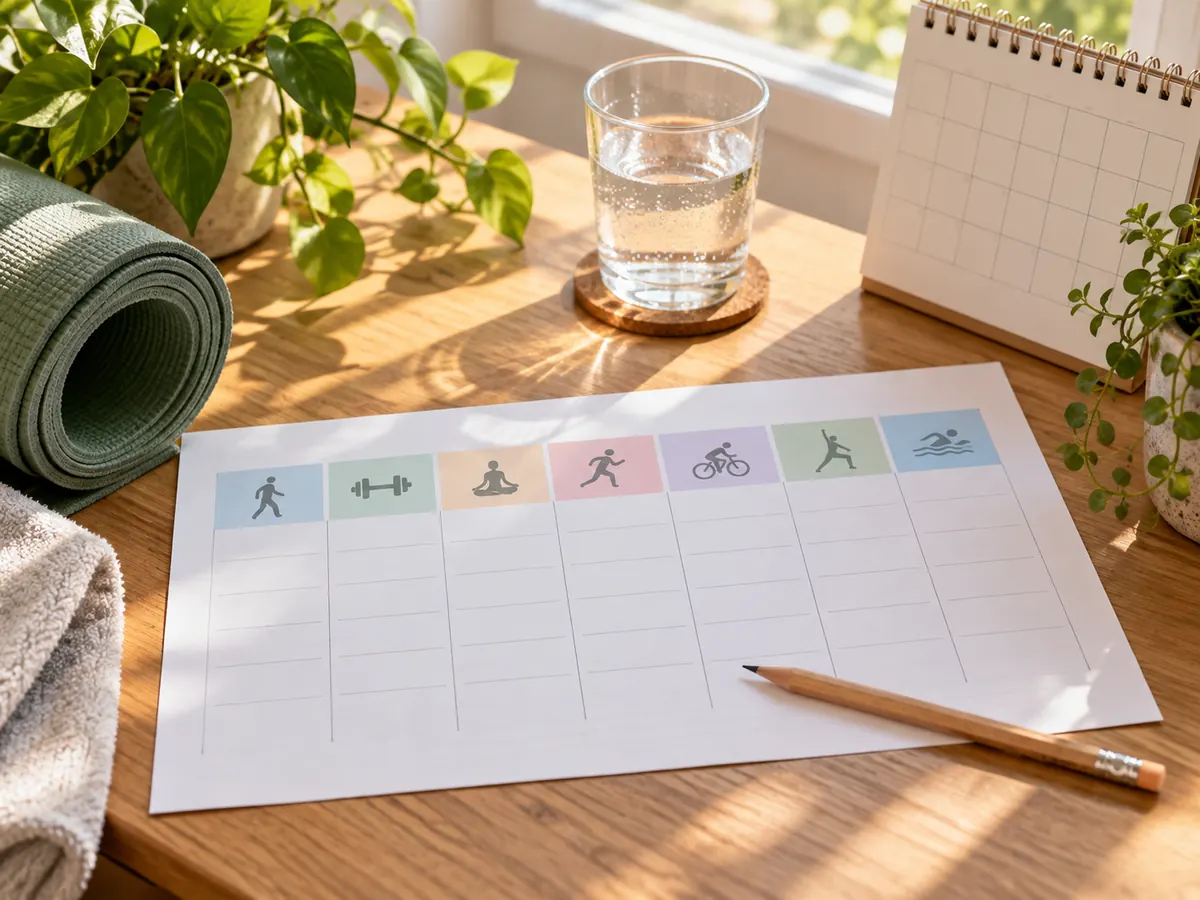
Decide what the shared page is allowed to say
Write a purpose sentence at the top: this calendar reserves the room and equipment; it does not prescribe anyone's workout. That sounds formal, but it prevents confusion when pages move around the house. Include the date, a chosen name or initial, the area required and a booking window. Keep exercise details elsewhere. A shared entry can say Alex, living room, mat space, evening window. It does not need to list movements or copy Alex's private notes.
Ask everyone what actually needs coordination. In one home, two people only compete for the quiet corner where instructions are readable. In another, the same tablet and printer are also shared. Record those resources as separate items rather than reserving the whole house. Do not create a complicated equipment booking system for objects nobody competes over. The calendar should resolve a real collision, not collect a complete account of everyone's day.
Give personal plans a visible owner
Label each active plan with its owner's preferred identifier and the date it was selected. Use a folder, clip or document sleeve for each person. A color can help people recognize a folder, but the written label matters because colors are easy to confuse under different lighting or on a black and white printer. If two people use the same printable, keep two marked copies rather than sharing one sheet containing overlapping annotations.
Place a small owner box on the front sheet: personal instructions, reference title, current version and where related notes are stored. A household member can return the folder without reading its contents. Leave private observations inside the folder instead of writing them on a wall calendar. Sharing space is not an agreement to share personal tracking data. If someone wants a particular note visible to another person, they can choose to move that information themselves.

Create a booking rule before a conflict happens
Choose a practical rule for overlapping reservations. For example, confirm bookings the previous evening and discuss later changes directly with the affected person. The rule is about communication, not who deserves the room most. Avoid a vague first come, first served policy if one household member cannot check the calendar until after work. Ask whether a recurring reservation is helpful or whether flexible daily windows better describe how the room is used.
Write one fallback beside the calendar. It might be a different time window, a different suitable room or simply postponing the booking discussion. Do not write an alternative exercise as the fallback: rearranging a room reservation does not establish that another movement plan is suitable. When both people need the same resource, mark the clash clearly and resolve it before either person sets up. Erasing another person's initials without a conversation hides the decision instead of making it.
Use status words that describe bookings
Keep the calendar legend short: proposed, confirmed, released and changed. Those words describe space reservations rather than performance. A confirmed booking does not mean a session happened, and a released booking does not mean someone failed. If you also want a record of room use, add a separate tick after the room is cleared. Keep that housekeeping mark distinct from any personal completion mark in a workout log.
Consider Tuesday's example. Sam proposes the living room after dinner. Lee needs the tablet in the same window. Both proposals are visible, so Sam changes the room booking and Lee confirms the tablet. Later Sam releases the reservation because another commitment runs late. The shared page tells everybody what resources are available. Sam's personal log can describe what happened, if Sam chooses to record it. Nobody needs to convert the released room booking into a public explanation.
Set a clear handover for the shared space
Make the end of a booking easy to recognize. Put shared equipment back in its agreed location, close personal documents on the tablet and return individual papers to their folders. A small basket for unclaimed sheets is more useful than a pile that looks like the next person's instructions. Write the owner's name on the back of loose pages when feasible, so a tidy room does not depend on somebody remembering every cover design.
If instructions remain on a stand between bookings, attach an owner label and a note saying personal reference. Do not leave an open log visible simply because it is convenient. Agree on whether the next person can move the stand, and keep a separate place for general room information such as printer instructions. This separation lets people cooperate on the environment while retaining control of their own planning materials. The handover is complete when the next booking can begin without sorting somebody else's paperwork.
Review the arrangement as a household tool
After using the system, ask what created friction: unreadable initials, reservations covering too much space, a calendar hidden behind another sheet or resources listed under different names. Change one coordination rule at a time. If the living room is almost never contested, remove that booking field and keep only tablet reservations. A system can become simpler as you learn what the household actually shares. There is no benefit to maintaining columns that nobody uses.
Keep old calendars only if they answer a practical household question. They are not a reliable record of anyone's exercise participation. Before recycling a page, check whether personal information was accidentally added and handle it accordingly. Start the next calendar with current resource names and agreed booking rules rather than copying every detail from last month. The aim is a predictable shared environment, with clear ownership of individual plans and fewer interruptions when somebody wants to use their own resources.
When someone new joins the arrangement, explain the legend and folder ownership before offering calendar access. A short explanation avoids inheriting assumptions from people who helped design the original system.
A shared workout calendar works best as a booking board. Give each personal plan an owner, coordinate only the resources people share, and keep individual logs separate. Review the calendar by asking whether it prevented confusion, not whether everyone filled every box.
Written for general information by The Better Plans. Exercise and wellness content cannot diagnose a condition or replace individual professional advice. The Better Plans also sells digital products on Etsy, but this article is free to read and requires no purchase. Read our editorial policy or send a correction.