THE BETTER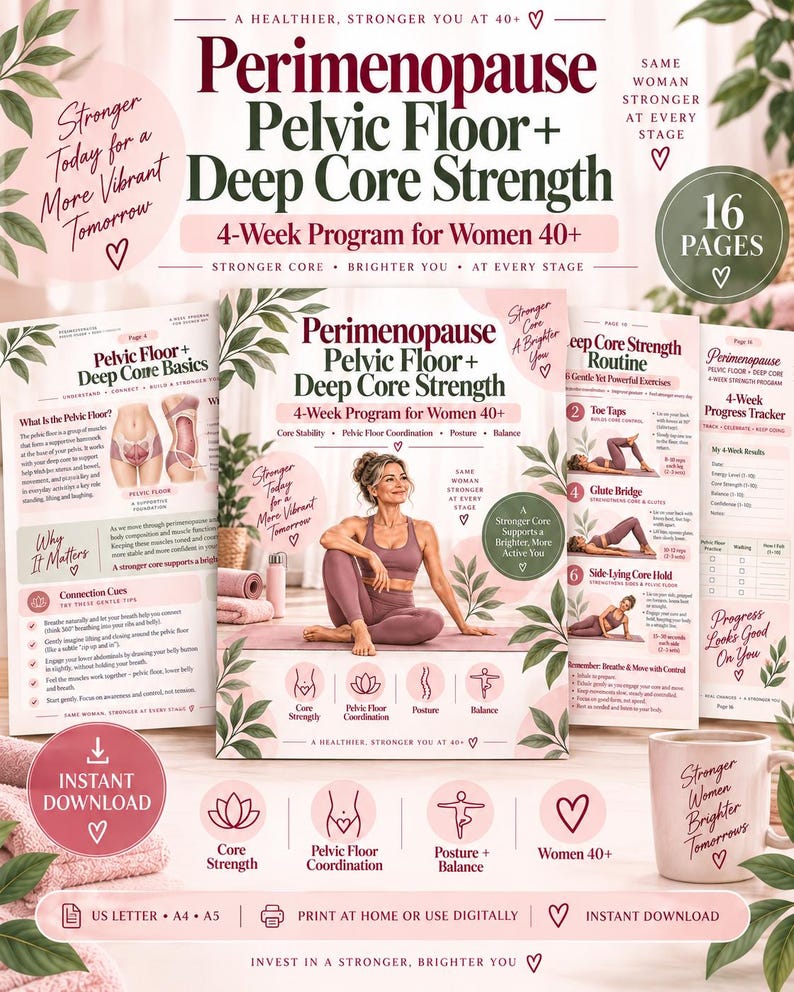
 PREVIEW 02 / 10
 PREVIEW 03 / 10
 PREVIEW 04 / 10
 PREVIEW 05 / 10
 PREVIEW 06 / 10
 PREVIEW 07 / 10
 PREVIEW 08 / 10
 PREVIEW 09 / 10
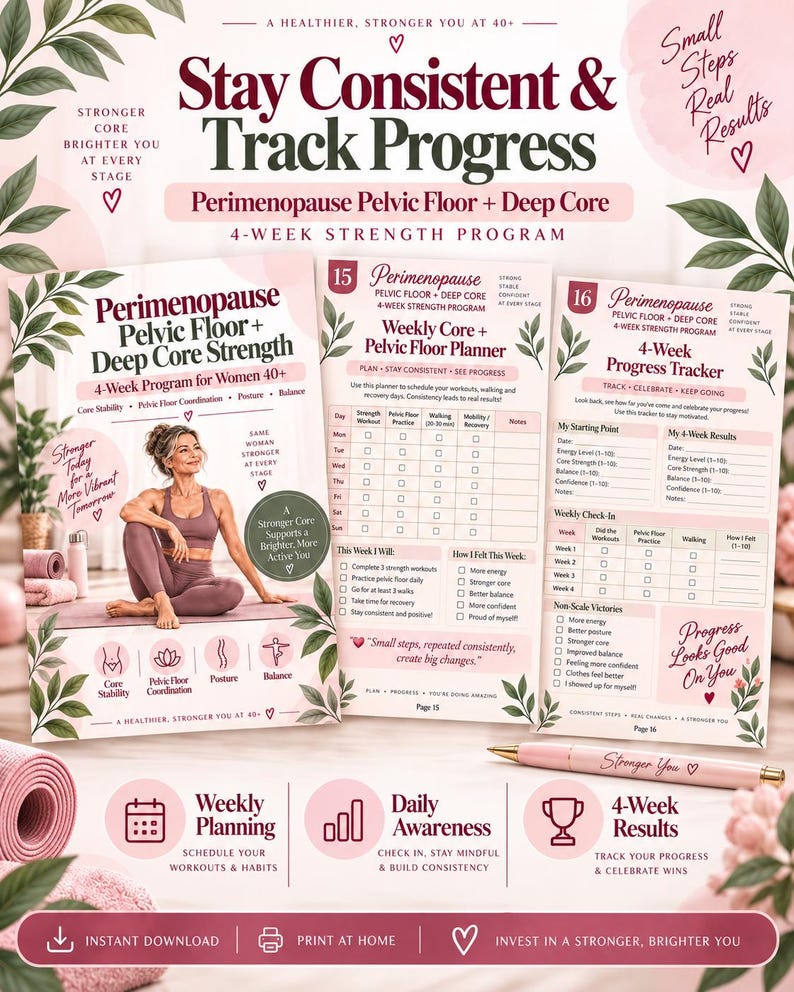 ORIGINAL ETSY MOCKUP / 10
Inside the four-week pelvic floor and deep-core printable.
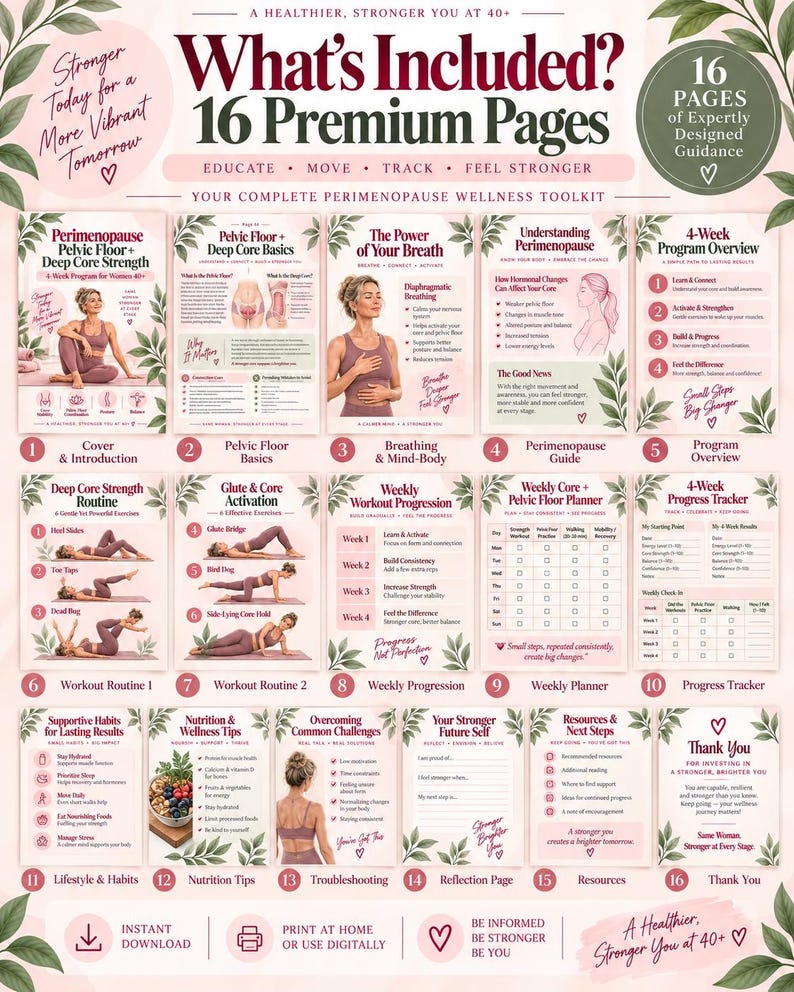
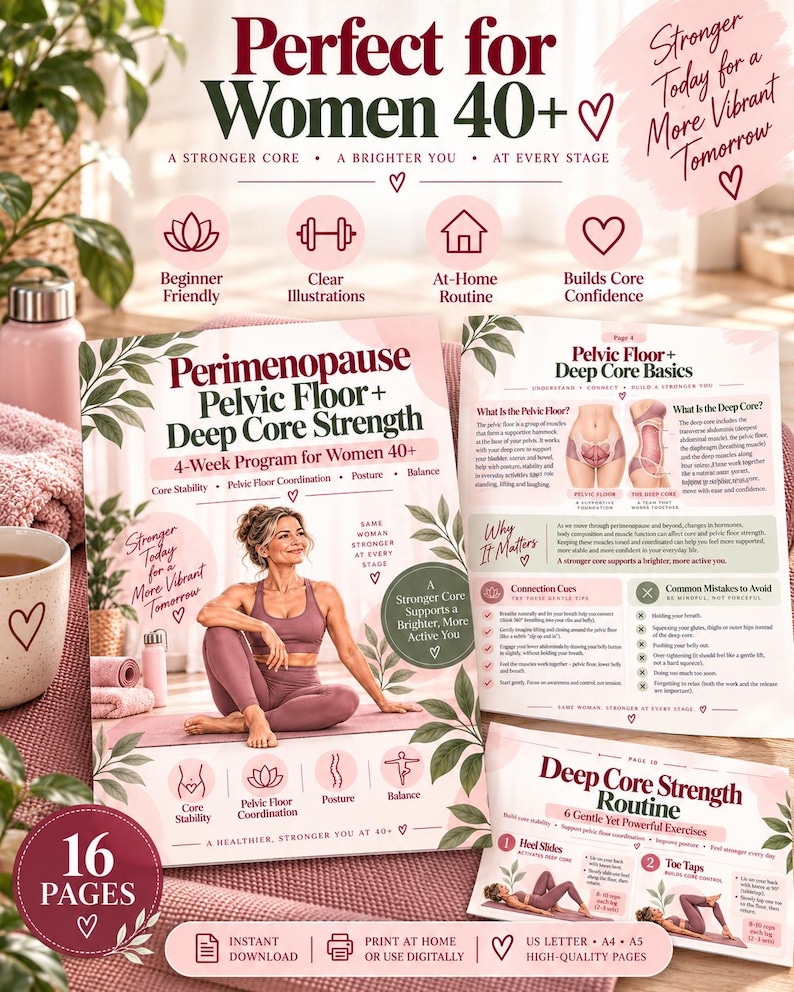
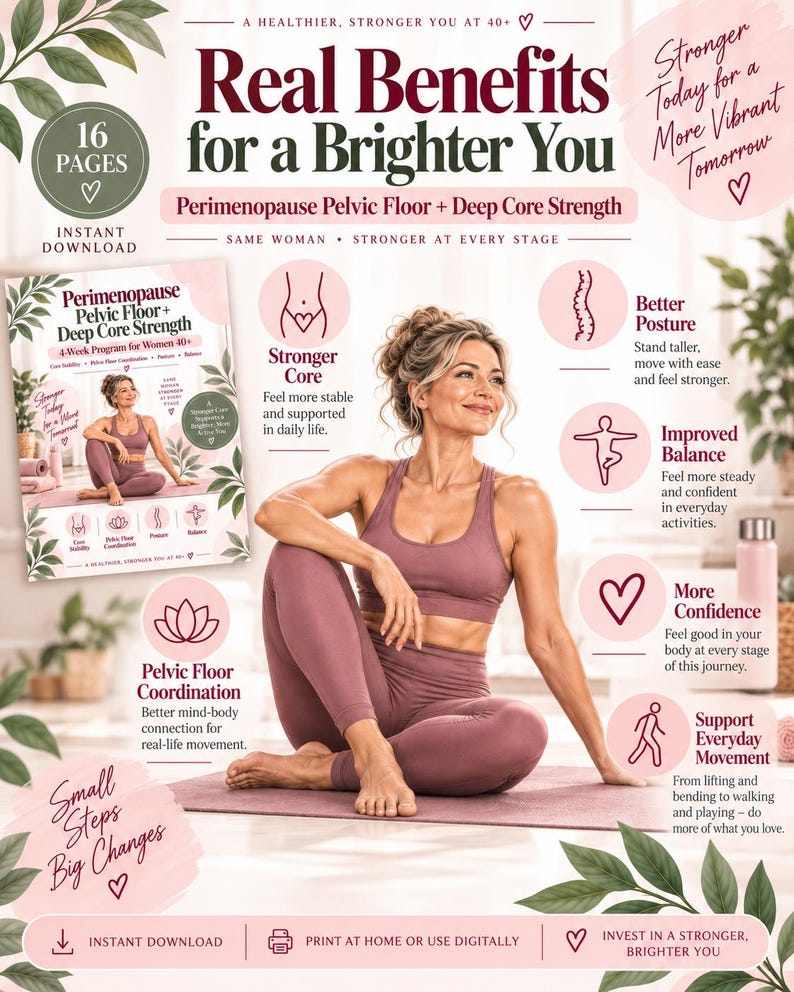
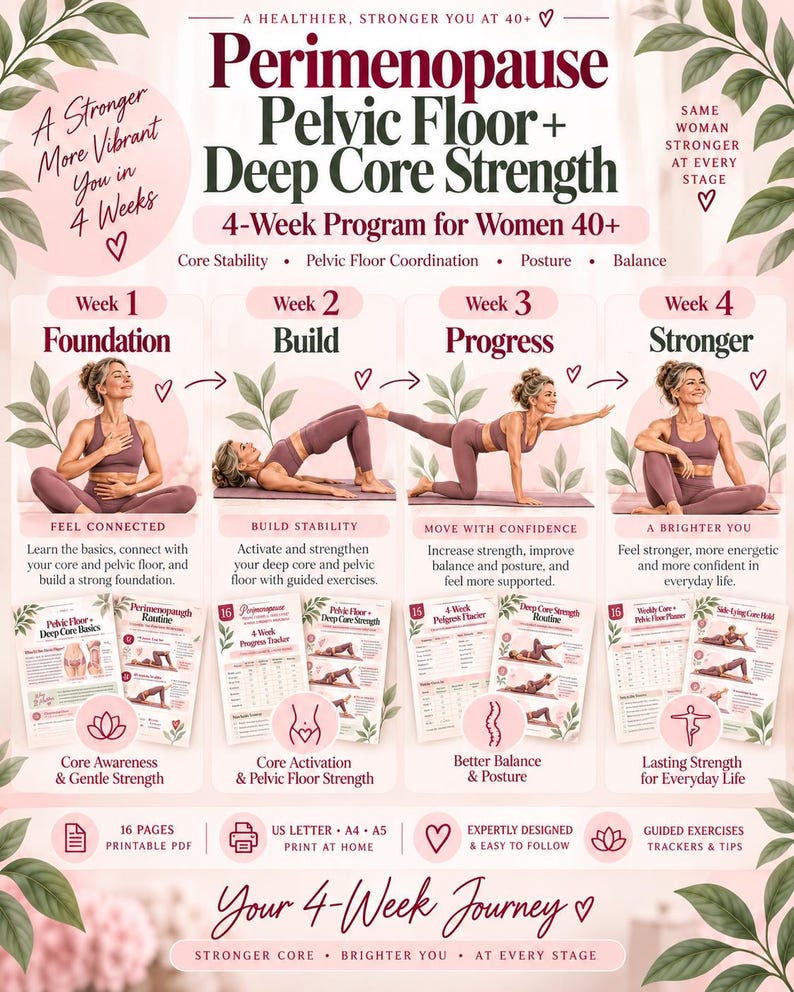
A fitness plan for women in perimenopause should make its contents clear without implying that the same movements fit everyone. This 16-page printable brings together pelvic floor awareness, breathing, deep-core work, posture, balance, glute and hip support, planning and tracking. The guide below explains how the listed pieces relate to one another, what to inspect in the mockups and when individual guidance matters. It describes the product; it does not prescribe a treatment or determine whether a particular exercise is right for you.
What is in the sixteen-page set?
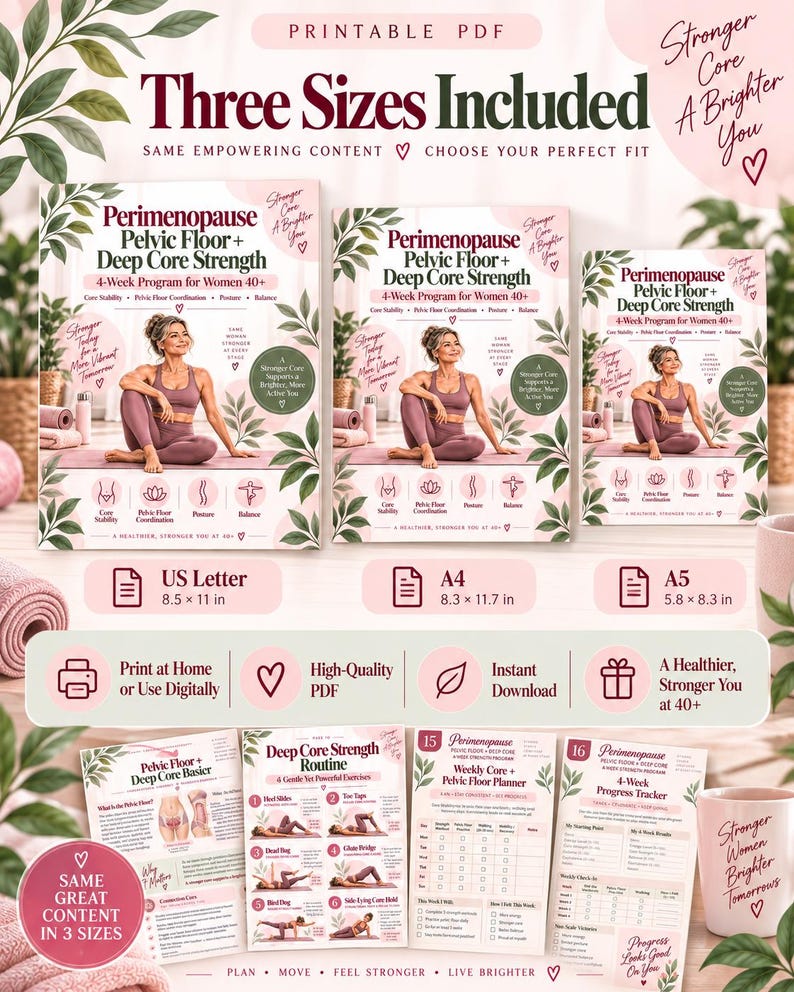
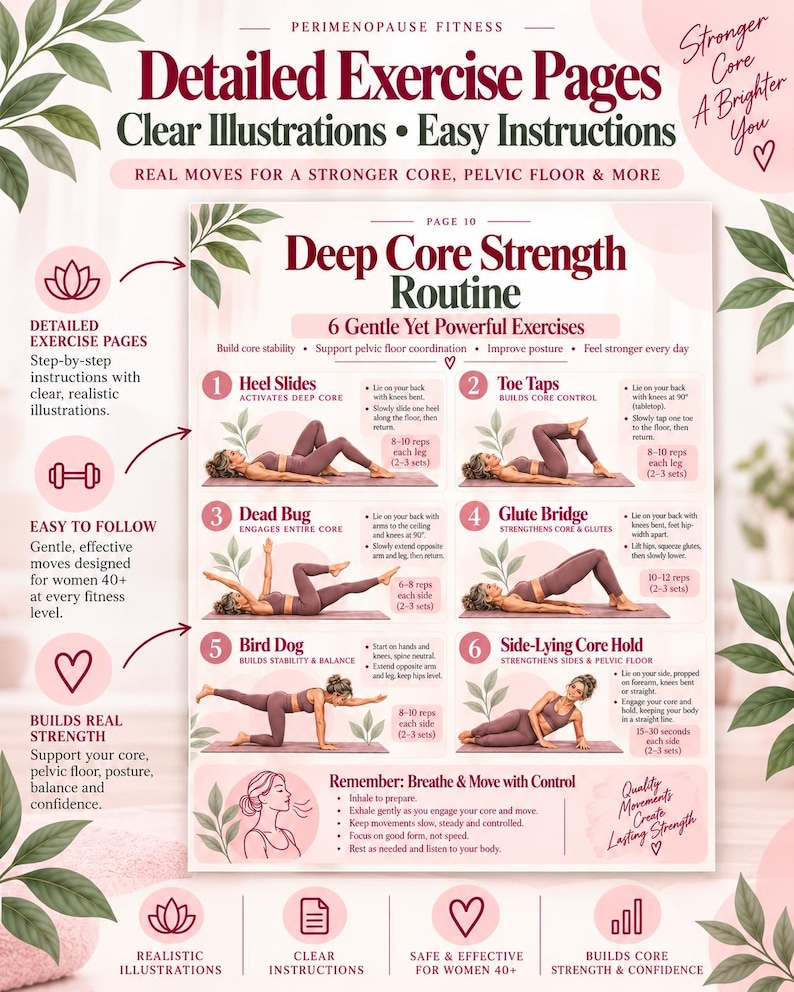
The Etsy description lists 16 coordinated pages in a four-week structure. It names pelvic floor and deep-core education, breathing and connection practice, a deep-core exercise routine, a pelvic floor coordination routine, standing core and balance, glute and hip support, a gentle low-energy movement day, a weekly planner and a four-week progress tracker. It identifies US Letter, A4 and A5 PDFs and lists three PDF files. A page count refers to content pages, while a file count refers to the downloads; they answer different buying questions. The gallery gives you a visual way to inspect the design, but the current Etsy listing is the final place to verify file contents.
The combination of explanatory pages, exercise pages and planning pages is what distinguishes this set from a single exercise poster. A buyer seeking only a wall chart may prefer a smaller resource. Someone who wants a printable framework for reviewing a routine over several weeks may value the planner and tracker as much as the movement charts.
Read the educational pages first
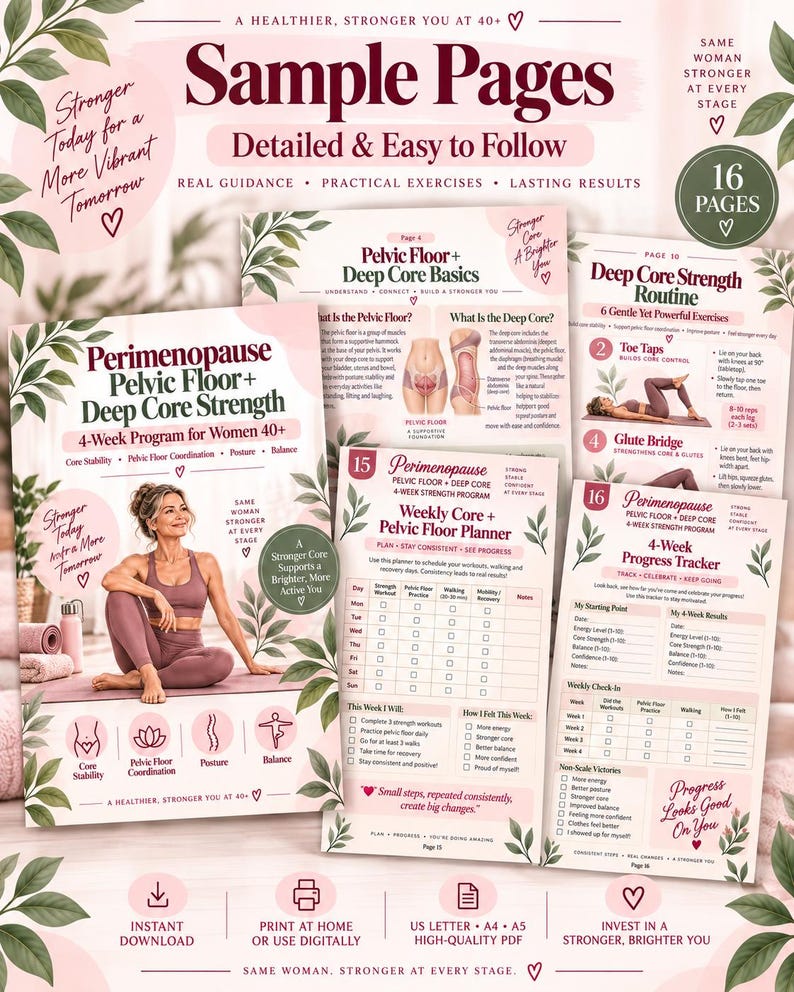
The listing presents pelvic floor and deep-core education before the routines. That ordering matters: it invites you to understand the terms used in the exercise pages rather than simply copying positions from pictures. Breathing and connection practice are also named components. When reviewing the mockups, look for clear instructions, readable diagrams and a distinction between explanation and practice. A printable cannot watch how you breathe or move, so it should be treated as a general reference, especially if a cue feels unclear or uncomfortable.
Pelvic floor symptoms do not all have the same cause. The product's own disclaimer says strengthening is not appropriate for every pelvic-floor condition. Pain, prolapse, incontinence, pregnancy or postpartum concerns and other medical situations warrant personalized assessment. Avoid interpreting the existence of a four-week plan as a promise that symptoms will change in four weeks. The dates organize the pages; they are not a medical timeline.
See how the movement pages are organized
The description separates deep-core work from pelvic floor coordination and also mentions standing balance and glute or hip support. That spread suggests the pack is intended as a broader movement routine, not only one isolated action. Open several previews to see whether the positions, captions and transitions are understandable to you. Check whether any exercise needs floor access, a chair, free standing space or other setup before assuming the entire set will fit your home. If the previews do not answer that question, ask the seller for clarification rather than guessing.
A low-energy day appears in the listed contents, giving the schedule a different kind of page from the main exercise sessions. That can be useful for someone who prefers a flexible routine, but it does not turn the plan into individualized rehabilitation. Choose movements within your own capabilities and stop when an exercise causes pain or concerning symptoms. A qualified clinician or pelvic-health professional can help interpret an individual situation in a way a printable cannot.
Use the four-week structure thoughtfully
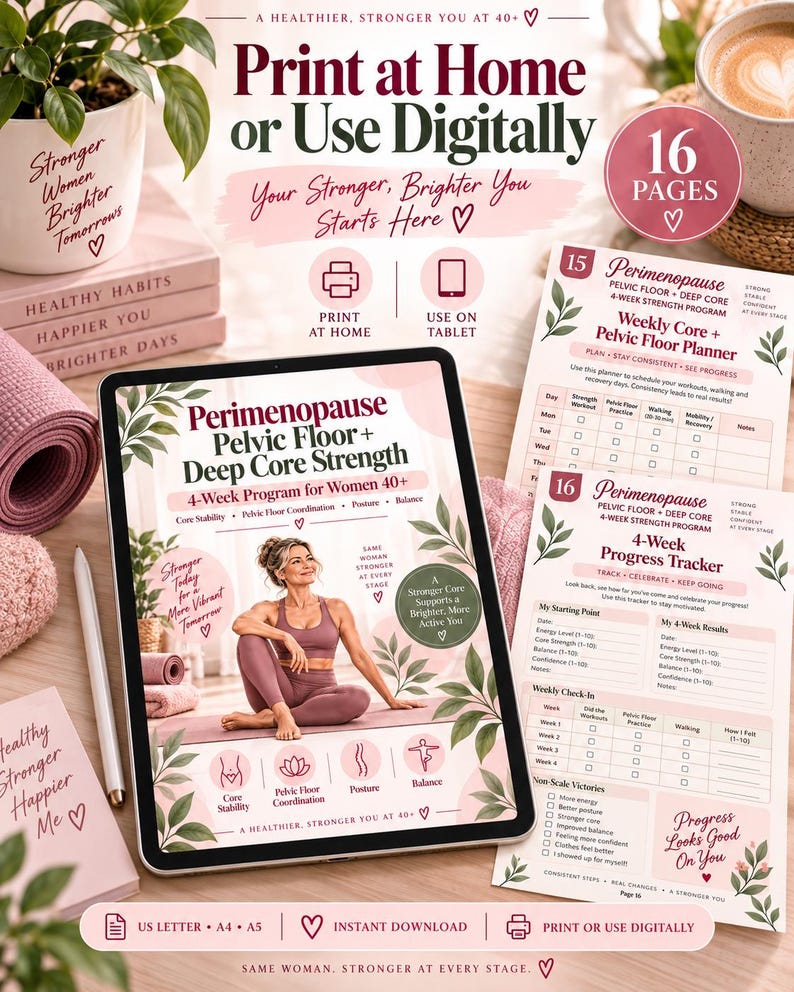
The weekly planner and four-week tracker offer space to record what you actually did. A simple note might capture which page you used, whether the setup felt practical, and any question you want to ask a professional. Tracking should help you notice the routine's fit in daily life, not pressure you to continue a movement that feels wrong. It can be perfectly reasonable to pause a schedule, repeat a familiar page, or seek guidance before proceeding. The printed timeline is an organizational tool, not a measure of success or a substitute for clinical goals.
People often buy exercise printables because they want fewer decisions at the start of a session. A sequence of pages can provide that structure. Before relying on it, check that you can read the print size comfortably and that the page layout works in the place you plan to use it. A binder may be convenient for the planner; a tablet with zoom might be better for detailed instructional pages. Neither choice changes the underlying suitability of a movement.
Check the previews and files before checkout
The gallery includes multiple mockups, and the listing may also show video. Look beyond the cover image: find examples of the educational page, an exercise page, the planner and the tracker. Ask whether the illustrations show enough detail to support your understanding and whether the page text can be read in your intended format. The site shows original Etsy images, but the Etsy listing controls the current files, price and any sale eligibility. Confirm those details there before paying.
US Letter, A4 and A5 are listed as PDF options. Choose the paper format that matches your printer or use the digital file on a device. Print a preview only after purchase and examine the printer's scaling settings so text and margins are not cut off. It is a digital product; no physical binder or poster is mailed. If you expect one file per size, verify how the three PDFs are labeled in the Etsy download area.
Who should seek personal advice first?
The product is general fitness information. Someone with pain, persistent symptoms, prolapse, incontinence, pregnancy or postpartum concerns, or a medical condition may need specific guidance before trying a new pelvic floor routine. A professional can assess whether strengthening, relaxation, coordination or another approach is appropriate; a generic printable cannot make that distinction. This boundary protects the usefulness of the pack: it can help organize information and visual references without claiming to diagnose a condition.
If you are choosing the pack for its 16-page design, four-week organization and printable planning sheets, compare those features with your needs. If you are seeking treatment for a symptom, start with qualified care and use any printable only if it fits the advice you receive. For questions about what is included in the files, contact The Better Plans through Etsy or the website email. For decisions about your health, use an appropriate clinician.
Confirm the current files and price at your chosen checkout. This guide helps you evaluate the printable; it is not personal health advice.