THE BETTER
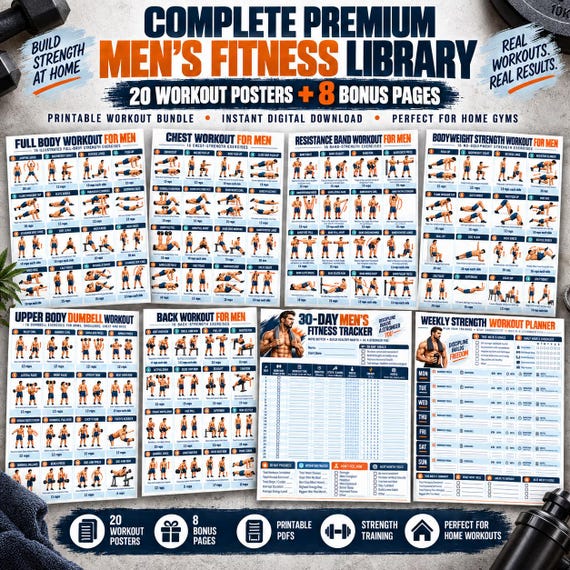
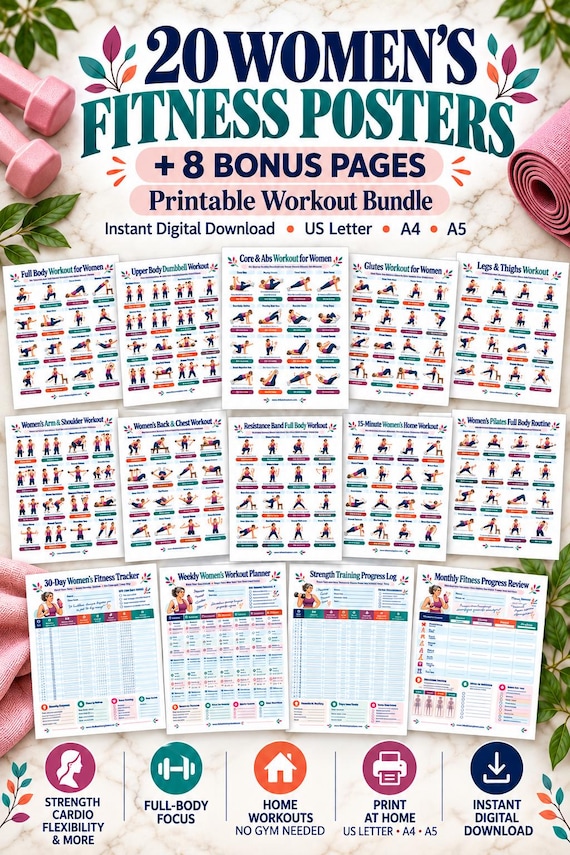
A dumbbell printable can be a convenient reference, but an attractive collection of poses does not automatically contain a complete explanation. Before you put a chart into your working folder, examine what it actually communicates. This is an audit of a document, not a way to approve an exercise for a particular person. The aim is to identify instructions you can locate, details you cannot find, and questions that deserve a fuller explanation from an appropriate instructor. A small written audit makes those distinctions much easier to preserve.

Separate the chart from its accompanying guide
Begin with the actual files rather than the room mockups. A download may include a wall poster, an instruction booklet, a blank log and several paper sizes. Open each component and write down its job. The poster might provide names and diagrams while the booklet supplies written directions. If you judge the poster alone, you could mistakenly conclude that guidance is missing when it is elsewhere. Conversely, a file called a guide may contain only a cover and a list of exercises. File labels are useful clues, but the pages themselves are the evidence.
Use a simple component record: poster title, guide filename, relevant page, and notes. For example, an entry might say Chart A, booklet page 4, explanation located. Another might say Chart B, no corresponding explanation found. You are recording where information exists, without deciding whether the instruction is suitable for you. Keep the original titles in this record so you can describe any question to the seller precisely instead of asking about the arm exercise somewhere in the bundle.
Check whether the pictures tell a connected story
Look at one illustrated entry at a time. Can you identify the image that represents the beginning and the image that represents the end? Are arrows explained, or do they leave you wondering whether they indicate movement direction, a repeated sequence or a change of viewpoint? Some posters deliberately show a single reference position. That can be appropriate for a reminder, but it should not be mistaken for a complete sequence. Write single pose shown when that is what the document contains, rather than inventing the missing transition.
Compare captions with nearby illustrations. A caption positioned between two drawings may be visually ambiguous, especially in a dense grid. Inspect the PDF at a larger zoom to see whether the layout resolves the issue. If the original remains unclear, your audit should preserve that uncertainty. Do not rearrange the diagrams yourself and then treat your interpretation as the author's instruction. The distinction between a small-print problem and a genuinely missing step helps you ask the right follow-up question.

Inspect the equipment description without choosing a load
Read any equipment note literally. A drawing of a dumbbell does not tell you its weight, dimensions, handle shape or whether the pictured item is adjustable. A general chart may intentionally avoid assigning a load. That omission is different from a seller claiming to provide a complete individualized program. Your document audit can record equipment named and load not specified. It cannot turn the silhouette of a dumbbell into a recommendation about what someone should lift.
If you already follow an instructor's established plan, keep that plan's equipment instruction separate from the printable's generic image. Your notes might have two columns: document says and instructor clarification. This preserves the source of each detail. Do not overwrite the original PDF caption with an equipment choice and later forget who supplied it. When a page uses several objects, identify which are explicitly required and which are merely part of the illustration before making any purchase decision.
Look for written cues and their boundaries
Search for explanations of the named movement, its starting setup, the order of the depicted steps and any stated limits. Record whether those directions are beside the illustration or in another section. A tiny sentence can contain important context, so readability matters as much as presence. However, more text does not automatically mean better instruction. A paragraph full of motivational language may still leave the actual diagram unexplained. Your audit should describe the information it supplies, rather than awarding points for length.
Pay attention to phrases such as beginner, complete and full body in the sales copy. Those are broad labels, not answers to a specific question about a page. If the download includes a caution or a statement about the role of the chart, keep it with the reference. Do not remove contextual notes when printing a cropped image. A crop that makes one drawing larger but deletes its caption can create a different, less informative document than the one you purchased.
Make uncertainty visible in a useful audit sheet
Choose status labels that describe your review: located, unclear, absent, and not checked. These labels work better than safe and unsafe because you are evaluating the communication of the file, not making an individual movement assessment. A row might read Starting position: located; transition arrow: unclear; booklet reference: page 7. This is specific enough to guide a question. A single overall star rating would hide which aspect needs attention and could make the whole download seem more certain than your review supports.
Keep seller questions separate from coaching questions. The seller can identify missing files, clarify intended page order or explain what a symbol means in the design. An instructor can address how the material relates to an established routine. If the same question crosses both areas, state both parts explicitly. For example, ask the seller which written explanation accompanies Poster 3, then bring that explanation to the person helping you understand the activity. Clear routing avoids expecting a file-support answer to resolve a coaching decision.
Work through a sample audit before filing the page
Imagine a bundle with ten posters and a six-page booklet. One poster shows two figures beside a dumbbell, a curved arrow and a short label. The booklet index lists the same label, but its page number points to a tracker. Your first action is a file check: confirm you opened the intended edition and that the viewer's page count includes the cover. If the index still does not match, record the exact filename and the mismatch. This is a document-support issue that you can describe without guessing what the figures are meant to do.
Next, inspect the poster at normal reading size. Suppose the label is readable on your screen but the arrow legend is not readable on a small print. Record that separately as a display issue. A larger print may solve legibility; it will not solve the mismatched index. The distinction prevents you from treating one improvement as a complete repair. Keep the chart outside your active reference set until the questions relevant to your intended use are answered.
Finally, save a dated note: index checked, explanation requested, small print unsuitable for intended display. If a corrected file arrives, add its filename and the date rather than deleting the earlier record. You now have a short history explaining why one edition was replaced. This approach is useful whenever several downloads have similar titles. It gives you a practical reason to keep, replace or question a page, while leaving personal equipment and movement decisions with the appropriate source of instruction.
A useful dumbbell printable audit locates explanations, identifies ambiguities and records the source of clarifications. Review the document carefully, and keep unanswered questions visible rather than converting a polished illustration into assumed instruction.
Written for general information by The Better Plans. Exercise and wellness content cannot diagnose a condition or replace individual professional advice. The Better Plans also sells digital products on Etsy, but this article is free to read and requires no purchase. Read our editorial policy or send a correction.