THE BETTER
A product title that mentions sciatica or pain relief may match the words you are searching for, but it cannot establish the cause of symptoms or which movements suit you. When evaluating a printable, separate what the package contains from what it can reasonably do.

Identify the contents first
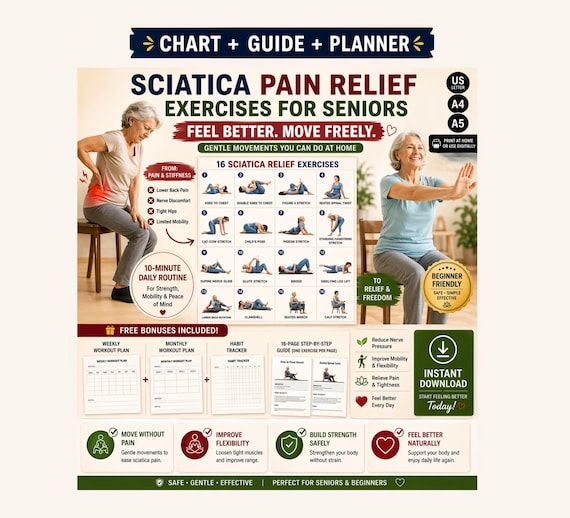
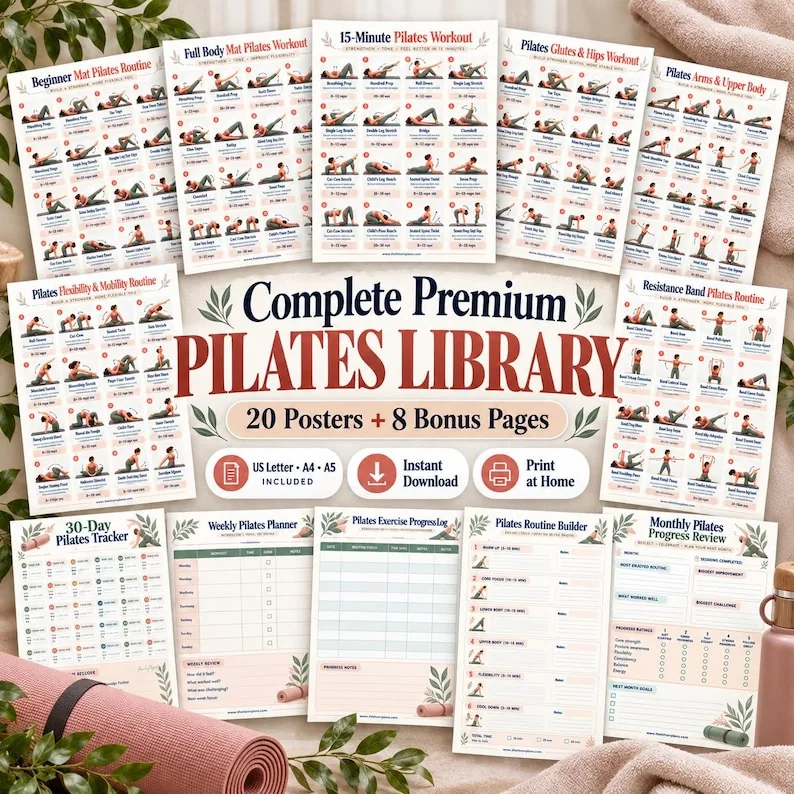
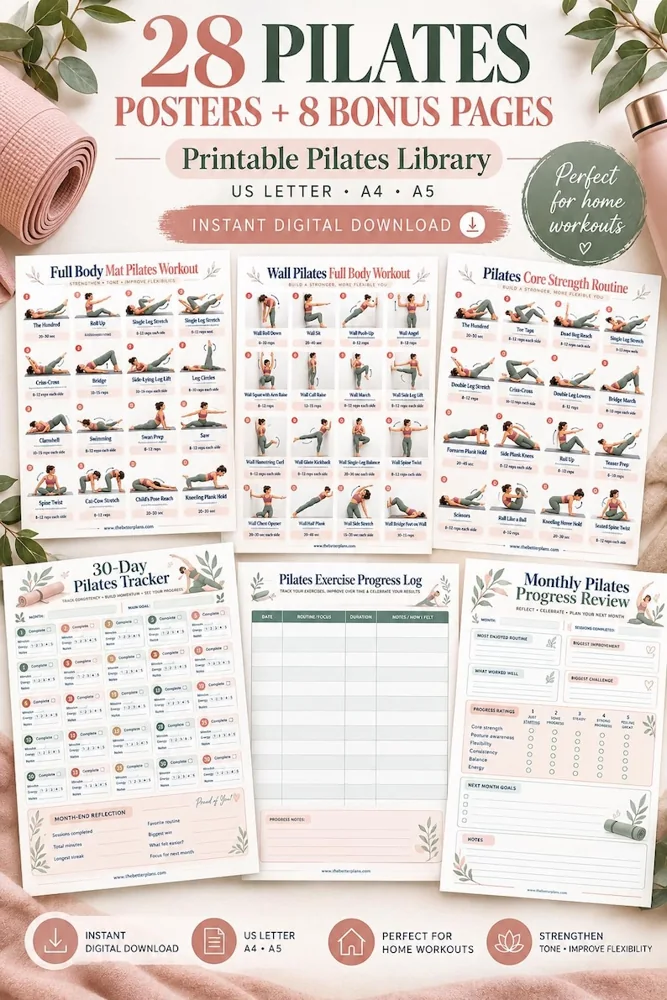
Find the actual illustrated exercise page, the quick-reference chart and any planner or tracker samples. Check whether the descriptions match the gallery and whether the movement steps are legible at your intended print size. A bundle can contain several useful formats, but a cover image does not show how each page works.
The listing may describe file counts and sizes such as Letter, A4 and A5. Confirm the current files on Etsy; a lifestyle mockup may show a printed chart that is not physically shipped. If an illustration is too small or a cue is unclear, ask the seller about the file rather than guessing at the movement.
Keep symptoms and shopping questions separate
A seller can answer what is included in a PDF. A qualified clinician can address whether a stretch is appropriate for a person's symptoms. Those are different questions, and a printable cannot perform an individual assessment.
The NHS describes sciatica as pain that can involve the lower back, bottom or leg and gives guidance on when to get help. New or worsening weakness, changes in bladder or bowel control, or numbness in the saddle area need urgent assessment. A product page should never be used to decide whether those symptoms can wait.

Decide whether the format serves you
If you already have professional advice, a readable chart might serve as a reference for a routine you understand. A planner may help record questions for an appointment. Neither proves that a movement treats the cause of pain or that every diagram is appropriate.
Before purchase, compare the instructional page with your actual need. If you need diagnosis or a tailored treatment plan, start with care. If you want a general visual resource, verify the files, read the directions and know when to stop using them.
Separate a page's contents from its promise
Start with the exact item being sold. Is it a sequence of illustrated stretches, a tracker, a poster or an educational guide? Read the number of pages and the preview at full size. A title mentioning sciatica does not establish that every illustrated movement is appropriate for your symptoms.
Be cautious with claims such as cure, instant relief or guaranteed recovery. Sciatica has different possible causes and symptoms, and a PDF cannot diagnose any of them. NHS guidance discusses symptoms, self-care and when to get medical help; it is a better starting point for general information than a product slogan.
If the listing mentions a professional endorsement, find out who made the material and what the endorsement covers. A decorative seal or stock photograph is not evidence of clinical review. Ask the seller what the file includes if the preview hides the instructions.

Inspect the movements before buying
A useful preview should show a legible sample instruction: starting position, movement direction, any support needed and how a person stops. A small montage of finished poses does not provide enough detail to follow a sequence safely. Zoom in and see whether the arrows and captions remain readable.
Consider whether the page describes alternatives, limits or a reason to pause. Some illustrations assume floor access, a stable chair or a range of motion that you may not have. Those assumptions matter more than the aesthetic of the mockup.
If you already have individualized advice, compare the page's movements with that plan before use. Do not use an attractive chart to override instructions from your own clinician. Even a well-made educational printable is general information until it has been assessed for your circumstances.
Know when a printable cannot answer the question
New or changing symptoms deserve individual assessment. A chart cannot tell whether pain is related to a nerve, a joint or another issue. NHS guidance lists situations needing urgent attention; read that guidance directly rather than relying on a product description to summarize warning signs.
Do not keep repeating a movement that worsens symptoms just to finish the set shown on the page. Stop and ask a suitable health professional what to do next. The document's page order is a presentation choice, not a reason to continue through pain.
Trackers can help record which page you looked at and questions to bring to an appointment. They cannot measure nerve recovery or prove that a stretch worked. A note about symptoms should be interpreted with a professional when you need medical advice.
Use a simple buyer checklist
Before purchase, check the file type, actual page dimensions, page count and whether the text is readable on your device. Look for a full sample page and a clear explanation of who the resource is intended for. Confirm the seller's download and refund details on the Etsy listing.
A printable may be worth using as a visual reminder for movements already cleared for you. Keep a copy nearby and note the particular instruction that helped you remember the sequence. That modest purpose is more credible than a promise to fix a condition.
Prioritize information quality over dramatic cover art. If the listing leaves key movements hidden or makes sweeping treatment claims, choose a clearer resource or seek guidance before purchasing. Good decisions start with knowing what the file can and cannot do.
A clear boundary for symptoms
If you are reading a printable because of pain, separate your purchasing question from your health question. The purchasing question is whether the file contains clear, legible and honestly described information. The health question is what is causing your symptoms and which movements, if any, are appropriate for you. A product preview may help with the first question; it cannot answer the second.
Read NHS information on sciatica for general context and when to seek help, and contact a healthcare professional about your own situation. Keep any symptom notes private unless you choose to share them with a professional. Do not buy a PDF on the assumption that its title is a diagnosis or that an illustrated sequence guarantees relief.
Confirm the files, treat symptom claims cautiously and seek clinical help for individual decisions.
Further reading
These public resources provide context for the general activity or symptom guidance mentioned above.
Written for general information by The Better Plans. Exercise and wellness content cannot diagnose a condition or replace individual professional advice. The Better Plans also sells digital products on Etsy, but this article is free to read and requires no purchase. Read our editorial policy or send a correction.