THE BETTER
An arrow beside an illustrated body can carry several meanings: direction, a change between pictures, a viewing cue or a return path. The meaning must come from the page's own instructions, not from the reader's imagination. A polished drawing is not necessarily a complete explanation of movement. Before relying on an exercise chart, inspect its key, labels and sequence as an information resource. This article offers a way to read diagrams carefully and identify questions that need clarification. It does not teach a particular exercise or prescribe timing, range or resistance; those details require appropriate instructions and, where relevant, individualized guidance.

Find the key before interpreting symbols
Look for a legend, numbered steps, explanatory notes or a written instruction beside the image. A publisher may define a solid arrow differently from a dashed one, or use a symbol to identify equipment rather than movement. Read the stated meaning before assigning your own. The same graphic style can mean different things in different downloads.
If there is no key, examine whether the written text explicitly explains the symbol. Do not assume that the absence of explanation makes the symbol obvious. List any unclear mark as a question, with its page and exercise title. This is useful when contacting the seller or an instructor because it points to the exact ambiguity. A chart earns trust through understandable information, rather than by expecting every reader to decode the artwork the same way.
Separate sequence from direction
A number placed above a picture may identify a step in a sequence, while an arrow may indicate a movement within that step. Two pictures side by side may show starting and finishing positions, separate sides or alternative views. Check the labels that distinguish them. Their arrangement on the page alone does not establish the intended order.
Describe what the page actually states before deciding what to do: picture one is labeled start, picture two is labeled finish, or the text names both sides. If those labels are missing, the illustration may function as a reminder for a movement already learned rather than a complete teaching resource. Do not fill the missing transition with a guessed action. Seek fuller instructions where the chart leaves the relationship between images unresolved.
Consider a page with two figures and a curved arrow between them. Without a stated starting label or written transition, the arrow alone cannot tell you whether the drawings show successive stages or different views. Name that missing distinction in your question instead of deciding that the second image must always be the finish.

Notice the viewing angle and orientation
An illustration seen from the front, side or back presents body positions differently. An arrow drawn across the page may not correspond to a simple left or right action from the reader's own perspective. Find any orientation note, body-part label or descriptive instruction that makes the intended relationship clear.
Avoid treating an illustration as a mirror unless the instructions explicitly explain that convention. Check whether text refers to the person's left and right or simply shows one pictured side. If the resource says repeat on the other side, that still does not explain every detail of an unfamiliar movement. Keep orientation questions distinct from questions about timing or suitability. A clearer image angle can resolve some confusion, but it does not provide information the page never states.
Identify support and equipment before the action
Look for a chair, wall, floor contact, band attachment or other support depicted in the image. Read any accompanying setup instruction. Equipment drawn as background decoration should not automatically be interpreted as part of the movement. Conversely, a small support point can matter even if the large arrow draws most of your attention.
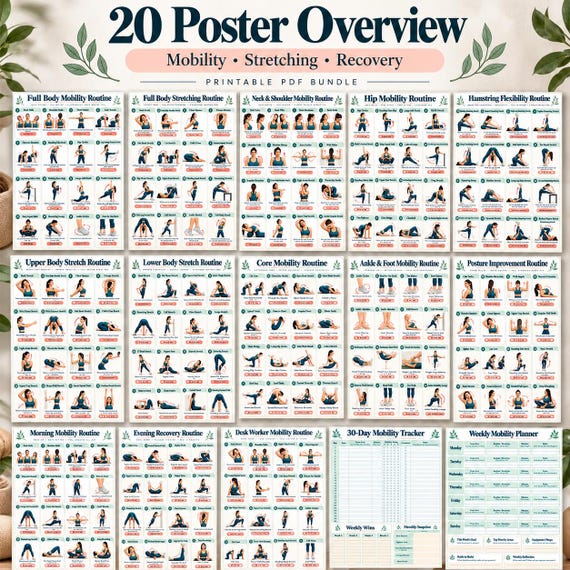
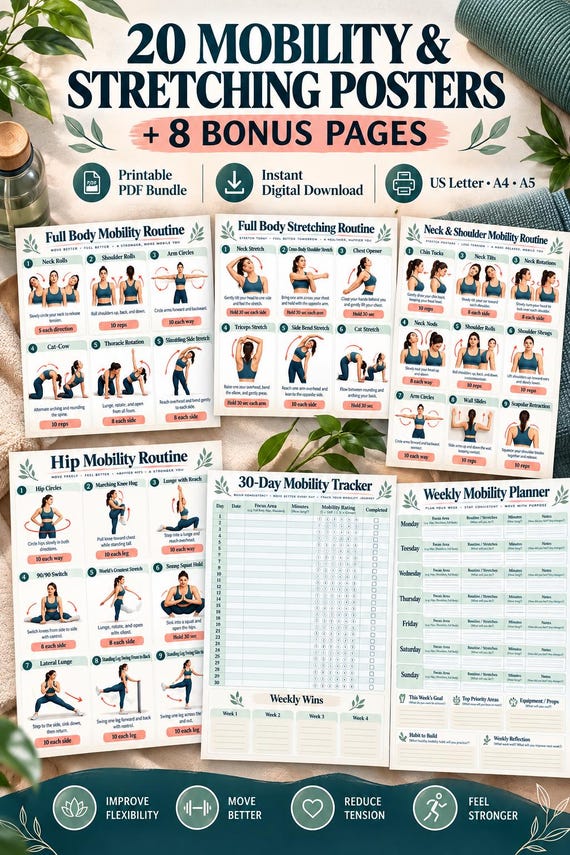
Inspect the full-resolution page rather than a cropped gallery mockup. A tiny illustration may conceal where the hand rests or how equipment is arranged. If the print size makes those details indistinct, zoom the original or use a more detailed reference. Do not improvise an attachment or support method from an incomplete drawing. The safe information-reading choice is to stop at the uncertainty and seek an explanation, rather than constructing an entire setup from a decorative scene.
Check what arrows do not tell you
A direction arrow does not automatically specify speed, repetitions, duration, resistance, breathing or a comfortable movement range. Those are separate pieces of instruction. Look for explicit written guidance rather than converting arrow length into a measurement or assuming a circular arrow means an unlimited repeated action.
If numbers are present, identify their unit and purpose. A large sixteen on a poster may refer to the number of illustrated movements, not the number of repetitions for each one. A numbered image may be a step label rather than a timing target. Read the surrounding text and avoid borrowing instructions from a different product with similar artwork. General diagrams cannot evaluate your technique or decide an appropriate exercise plan for your individual circumstances.
Use a plain-language comprehension check
Before using an unfamiliar reference, see whether the page lets you explain the setup, the pictured change and the stopping point in ordinary words. This is a test of the resource's clarity, not a test of physical performance. If you cannot identify a necessary part, write that gap as a question. Do not try the action simply to discover what an ambiguous arrow might mean.
For example, you might understand that the page shows two seated positions but still be uncertain whether the arm changes sides between them. That is a specific illustration question worth asking. Keep your description faithful to the page rather than adding a suggested answer. A fuller guide, a qualified instructor or clarification from the publisher may provide the missing explanation. A wall poster can remain useful as a reminder once the underlying instructions are understood.
Choose the next step according to the uncertainty
For a file-quality problem, such as an unreadable label or a missing page, contact the seller with the file name and page reference. For a question about the intended meaning of a diagram, ask for the original explanation or a clearer reference. For personal suitability, symptoms or technique assessment, seek the appropriate qualified guidance rather than expecting product support to evaluate your health.
Keep a note of the clarification beside the reference, clearly labeled as an added explanation and its source. Do not replace the original diagram with a guessed drawing. If the uncertainty cannot be resolved, choose another resource rather than treating attractive design as sufficient evidence. A useful exercise illustration makes its own symbols understandable, and a careful reader recognizes where a page's information ends. Clarity before action is more valuable than completing every image on a chart.
Read the page’s own key, distinguish sequence from direction and seek clarification whenever a necessary setup or transition is missing.
Written for general information by The Better Plans. Exercise and wellness content cannot diagnose a condition or replace individual professional advice. The Better Plans also sells digital products on Etsy, but this article is free to read and requires no purchase. Read our editorial policy or send a correction.