THE BETTER
Balance work appears in many senior fitness charts. The word gentle can describe a marketing approach but cannot tell you whether a particular movement fits someone's fall history, medication or environment. Start with better questions.

What support does the page assume?
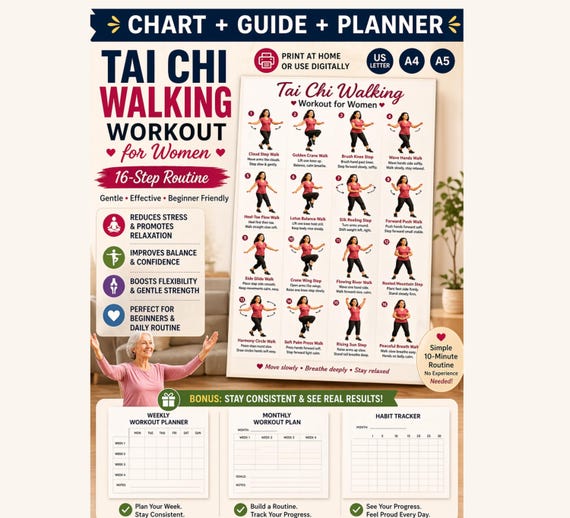
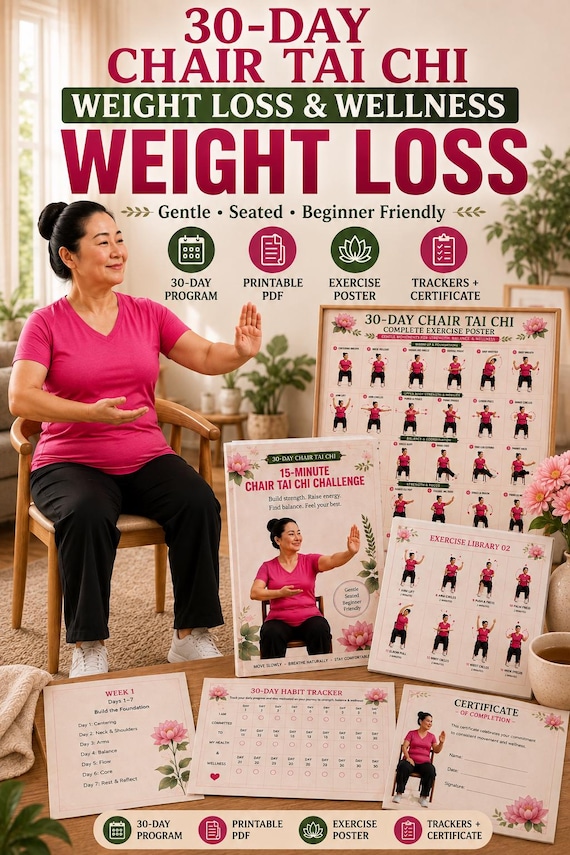
Look at whether the model holds a stable surface, stands without support or moves across the room. A decorative chair in the mockup may not be the same as a support specified in the instructions. Check the illustration and text together before attempting any movement.
Clear floor space, stable shoes and reachable support matter when you are arranging the activity. If the page leaves those assumptions unclear, get clarification. A person with recent falls or dizziness may need an individual plan rather than a general chart.
Can the instructions be read at the point of use?
A wall poster viewed several feet away should use cues you can recognize without leaning or taking your eyes off the environment for long. If the exercise requires detailed foot placement, an enlarged page or tablet might be more suitable than a small print.
Some charts work best as reminders after a movement has been learned with an instructor. They do not replace feedback on posture or individual safety. Treat a thumbnail as a sample of the graphic style, then read the full page to decide whether it serves your purpose.

What does public guidance actually say?
The CDC lists aerobic, muscle strengthening and balance activity as parts of the older-adult activity pattern. The National Institute on Aging notes that chronic conditions and individual needs can change how activity is approached. Those principles support variety and care, not an automatic recommendation for a particular product.
If you or someone you support has concerning symptoms, ask a health professional what type of balance work is appropriate. You can use a printable to organize or remember a suitable routine after that decision; it cannot make that decision for you.
Ask what the illustration expects
A balance page might show a person near a chair, holding it, or standing without support. Those are different setups. Inspect the actual caption and posture rather than assuming the word gentle tells you which one applies. A hand in a photograph may rest on furniture for styling, not as a formal instruction.
Trace the movement in your mind before attempting it. Does the person shift weight, lift a foot or change direction? If the start and finish are unclear, the chart may be a reminder for someone already taught the exercise rather than sufficient standalone instruction.
A person with a history of falls, dizziness or new symptoms may need an individualized assessment. A general chart cannot know the cause of those concerns or the right support for a particular person. Asking for professional guidance is part of choosing carefully.

Check the space before the page
Look at the floor, lighting and support surfaces. Clear loose objects and cords from the movement area. Put the chart where you can read it while stopped, rather than turning your head toward small text while trying to maintain a position.
A wall poster may require a larger print size than a desk reference. A tablet can zoom into an arrow, but zooming may hide the rest of the sequence. Try to see the whole step order first and then examine details one at a time.
Sturdy footwear and appropriate support depend on the activity and the individual. Public guidance offers broad activity principles, but it does not certify a particular room or chart. If you are unsure about setup, ask someone qualified who can see your circumstances.
Understand what public guidance does and does not say
The CDC describes balance work as one part of an older-adult activity pattern that also includes aerobic and muscle-strengthening activity. The broader recommendation is about regular movement across a week, not a claim that any one pictured exercise will prevent a fall.
The National Institute on Aging notes that chronic conditions can require adjustments. This reinforces the need to separate a general illustration from a personal plan. A printable can make a suitable routine easier to remember after it has been selected; it cannot select the routine for you.
Avoid interpreting a product's title as evidence. Words such as senior, beginner or safe are not a substitute for examining the movements and seeking personal advice when needed. The page can help you ask better questions; it should not close the conversation.
Use a preview as a decision tool
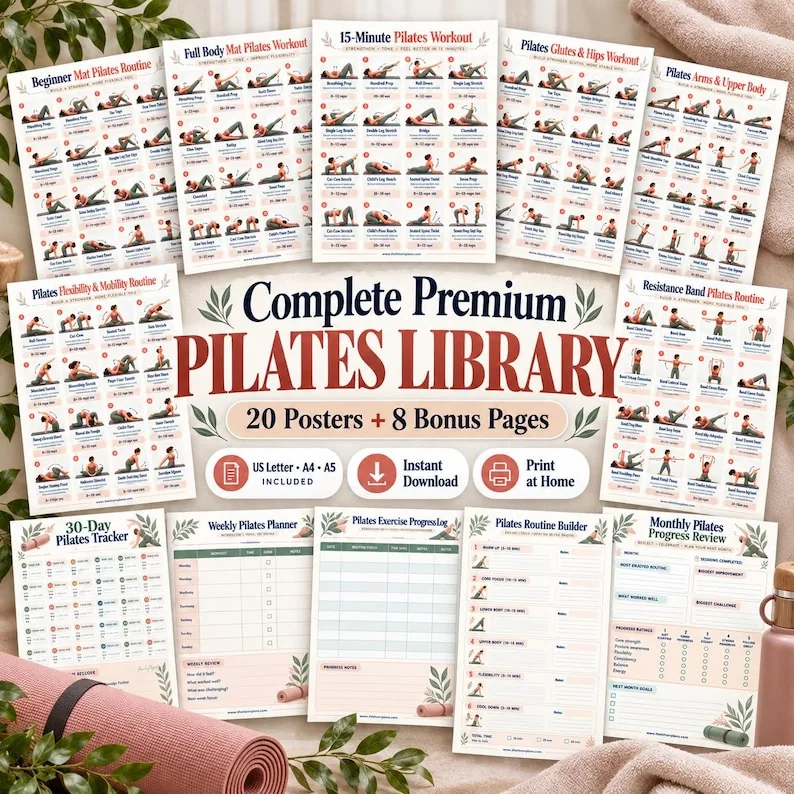
A useful preview shows a real instruction page at enough detail to judge the cues. Look for starting position, support assumption and sequence. If the listing shows only cover art and lifestyle scenes, ask for clarification about the contents before purchase.
If a tracker is included, consider what you would record: the source page, questions and whether you consulted an instructor. A checkbox cannot measure balance or establish that a practice is effective. Treat it as an organizational tool.
After reading the page, ask yourself whether you understand what it requests and whether you have the support you need. If either answer is uncertain, pause. Clear information and a suitable setting are more valuable than completing a printed schedule on time.
Questions to take to a qualified person
When you discuss balance activity with a clinician or suitably qualified instructor, bring the actual chart rather than describing it from memory. Show the starting position, required support, sequence and room where you expect to use it. Ask which movements fit your circumstances, whether you need someone nearby and what changes should make you stop and seek advice.
Note any answer beside the page without altering the original file. A chart does not know your medication, fall history or current symptoms. The right support can vary from person to person. A discussion grounded in the real illustration is more useful than a broad promise printed on a cover. If a question remains unanswered, pause that particular movement rather than assuming the picture establishes its safety.
Bring the actual printable to an appointment rather than describing it only by its title. Point to the illustration and ask which support arrangement, starting position and stopping point are appropriate for you. Write any individualized instructions beside the page or keep them attached to it. A generic chart cannot account for your history, surroundings or usual assistance, even when its design looks reassuring.
Choose a safe setting and clear instructions, and seek individual guidance when fall risk or symptoms are involved.
Further reading
These public resources provide context for the general activity or symptom guidance mentioned above.
Written for general information by The Better Plans. Exercise and wellness content cannot diagnose a condition or replace individual professional advice. The Better Plans also sells digital products on Etsy, but this article is free to read and requires no purchase. Read our editorial policy or send a correction.