THE BETTER
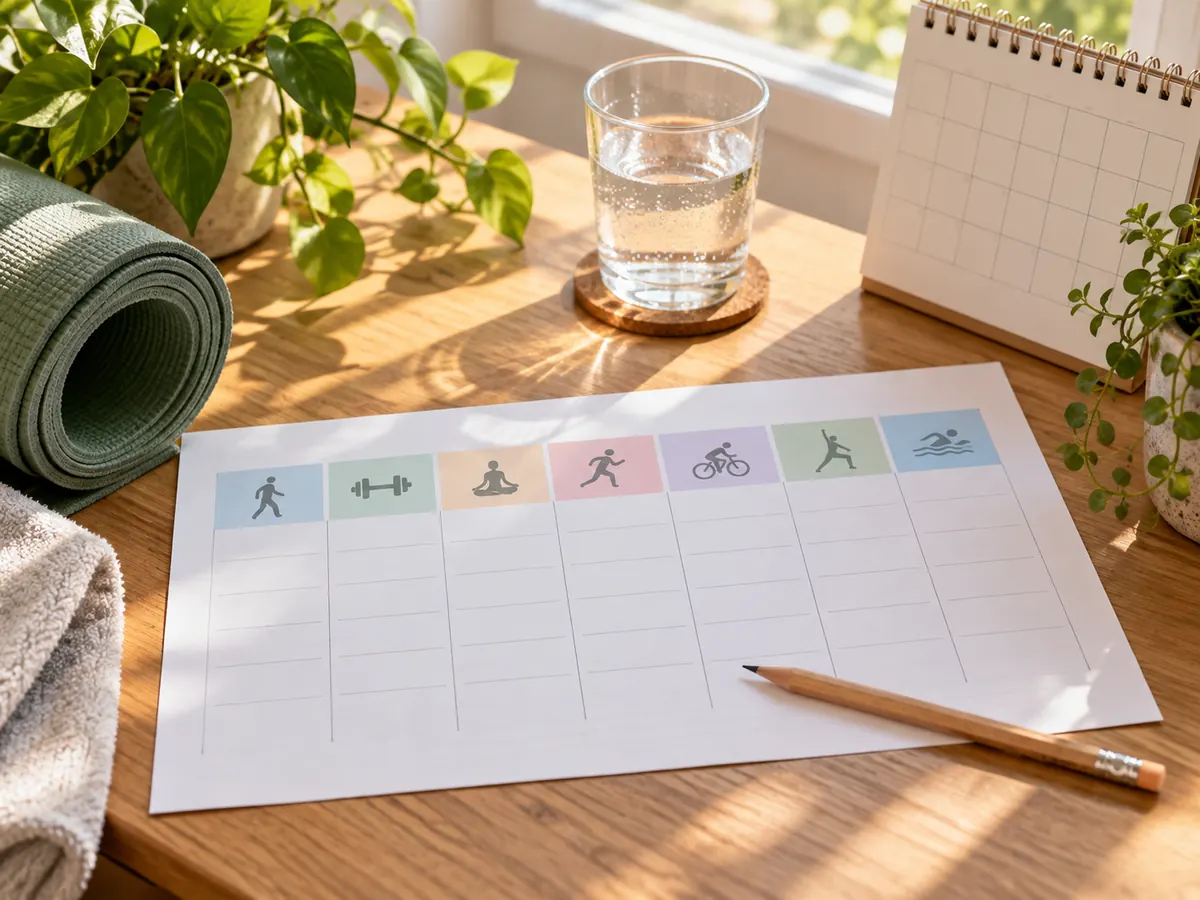
A weekly page should make choices easier, not make a missed day feel like failure. The useful part is seeing where activity might fit, what you did and whether the plan still matches real life.
Start with available time
Look at the week ahead before filling the boxes. Some days have longer windows and others only a few minutes. Mark the time you can reasonably spare rather than writing an ideal schedule you already know will be hard to follow. A short session can still be worth recording.
Consider variety rather than seven identical boxes. Adult activity guidance includes aerobic and muscle strengthening activity; older adults also benefit from balance work. That guidance describes a broader pattern, not a requirement to fill every calendar day with a prescribed workout.
Write instructions you will understand later
A note such as chair page 3 may make sense today but not next month. Add the product name, page number and a plain description of the movement. If you use a video or an instructor, note the source so you can find the exact sequence again.
Record actual participation separately from your intention. A blank plan can be revised without erasing what you did. If an exercise was confusing, a short question in the margin is more useful than checking a box simply to keep a streak.

Review and adjust without punishment
At the end of the week, ask what made an activity convenient and what made it difficult. Perhaps the chart was too small, the chair setup was inconvenient, or the planned time clashed with another commitment. Those are practical clues for the next plan.
If pain or symptoms change your options, do not use a printable calendar as a reason to push on. Seek professional advice where appropriate. A useful planner can make room for rest, a simpler activity or a different sequence without implying you have failed.
Begin with your real calendar
Open the next seven days rather than imagining an ideal week. Mark appointments, travel, family commitments and days when your available time is uncertain. A short window that you can actually use is more valuable than a long session that exists only on paper.
Leave some space unfilled. A blank day might become rest, a change of plan or an activity you had not anticipated. A printable should help you notice options, not turn every empty box into a problem. If you already follow advice from a clinician or instructor, the week should reflect it rather than compete with it.
You can use color or symbols to distinguish planned activity from what actually happened. For example, outline a box when you intend to move and fill it after the session. That visual difference keeps a useful record when a schedule changes.

Give each entry enough meaning
A label such as exercise is too vague to find later. Write the name of the chart, a page number or a simple phrase describing the sequence. Add the place you intend to use it if setup is part of the challenge. A plan that you can understand next week is easier to repeat or revise.
Decide what information to track before the first day. Date, activity and a short note may be enough. A complex scorecard can take more effort than the routine and can make a missed entry feel unnecessarily important. The page should lower friction rather than add administrative work.
When an instruction is unclear, record the question instead of ticking a box as though you completed it. That question can guide a closer read, a message to the seller about the file, or a discussion with a qualified professional about suitability.
Balance structure with flexibility
General activity guidance describes aerobic and strength activity for adults; older adults also benefit from balance work. That is a broad framework rather than a demand to schedule a specific move every day. A weekly plan can show variety without pretending that one digital product covers everything.
If Tuesday becomes impossible, move the intended session to a time that makes sense rather than copying the entire week blindly. A rest day can remain a deliberate part of the plan. If symptoms change your options, ask for individual advice and revise the page accordingly.
A printable can include suggested days or durations. Treat those as examples unless they come from someone who has assessed your circumstances. The calendar has no information about how you feel or what your medical history requires.
Review the week as an experiment
At the end of the week, ask what made the easiest session possible. Was the reference at hand? Did a shorter time slot work? Was the chair or walking route convenient? Those observations provide a better next step than a simple percentage of completed boxes.
Consider what made one activity harder. A tiny label, missing page or confusing diagram can be a resource problem, not a motivation problem. Adjust the print size, choose a clearer guide or get instruction before repeating something you do not understand.
Keep the next seven-day page simple. Copy the entries that served you, leave room for changes and do not require yourself to make up every missed box. A sustainable plan is one you can keep editing in response to ordinary life.
An example of a week that can change
Suppose you have a quiet Monday, a busy Tuesday and an unpredictable Friday. You might pencil an activity into Monday, write a shorter option beside Tuesday and leave Friday open. On Sunday, record what really happened. A session shifted from Tuesday to Thursday remains part of the week; there is no reason to erase the change. The record now explains which days had useful windows and which plans needed room.
The following week, use those observations before filling new boxes. Perhaps you found that an afternoon slot was easier than morning or that a particular page took longer to set up than expected. Adjust the schedule rather than copying the old one. If you follow individualized advice about activity, make that advice the basis of the plan. A generic chart can organize your choices but cannot decide what you personally should do.
Plan the week you have, record what happened and use that information to shape the next one.
Further reading
These public resources provide context for the general activity or symptom guidance mentioned above.
Written for general information by The Better Plans. Exercise and wellness content cannot diagnose a condition or replace individual professional advice. The Better Plans also sells digital products on Etsy, but this article is free to read and requires no purchase. Read our editorial policy or send a correction.