THE BETTER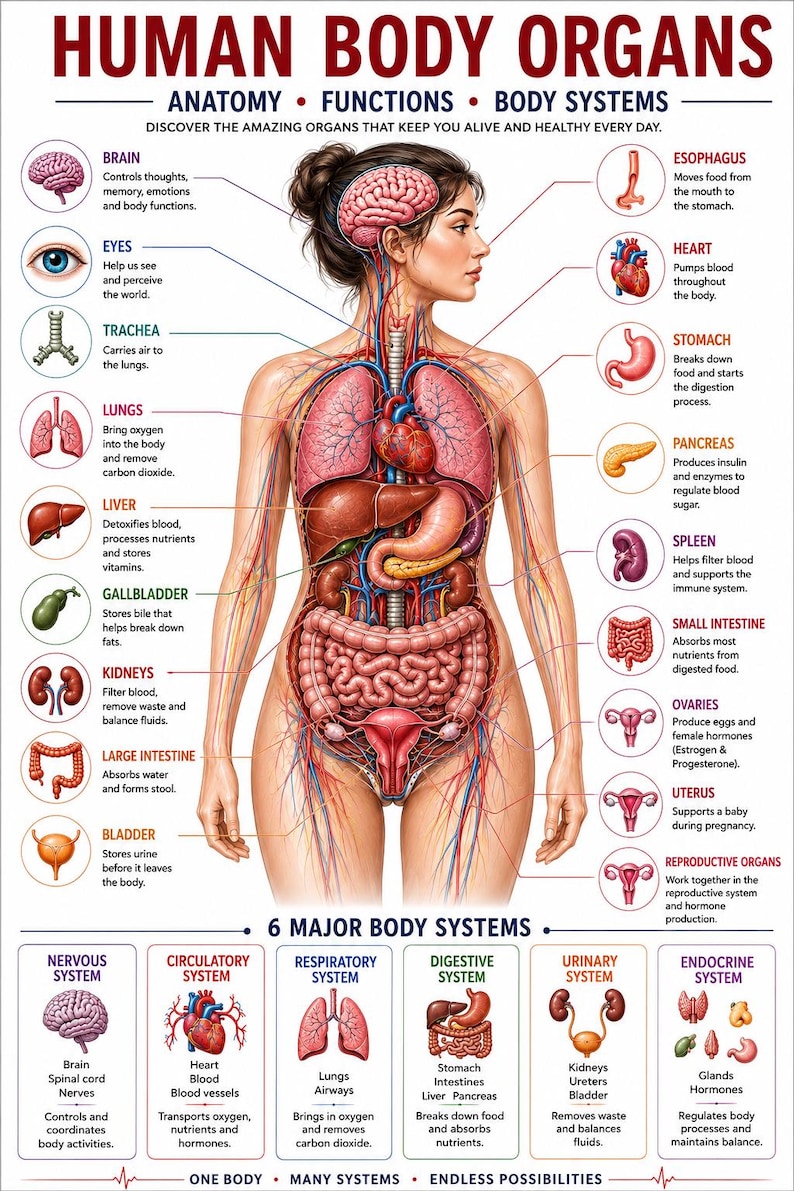
 PREVIEW 02 / 10
 PREVIEW 03 / 10
 PREVIEW 04 / 10
 PREVIEW 05 / 10
 PREVIEW 06 / 10
 PREVIEW 07 / 10
 PREVIEW 08 / 10
 PREVIEW 09 / 10
 ORIGINAL ETSY MOCKUP / 10
How to use the Human Body Anatomy printable learning pack.
An anatomy poster can invite curiosity, but a useful learning pack should do more than decorate a wall. The Human Body Anatomy listing combines an organs poster, reference guides and activities intended for beginners. This guide walks through what the description actually includes, how a teacher or parent might use each part, and what to check in the previews before purchasing. It is an educational printable, not a substitute for a textbook or professional medical advice.
What the listing says is inside
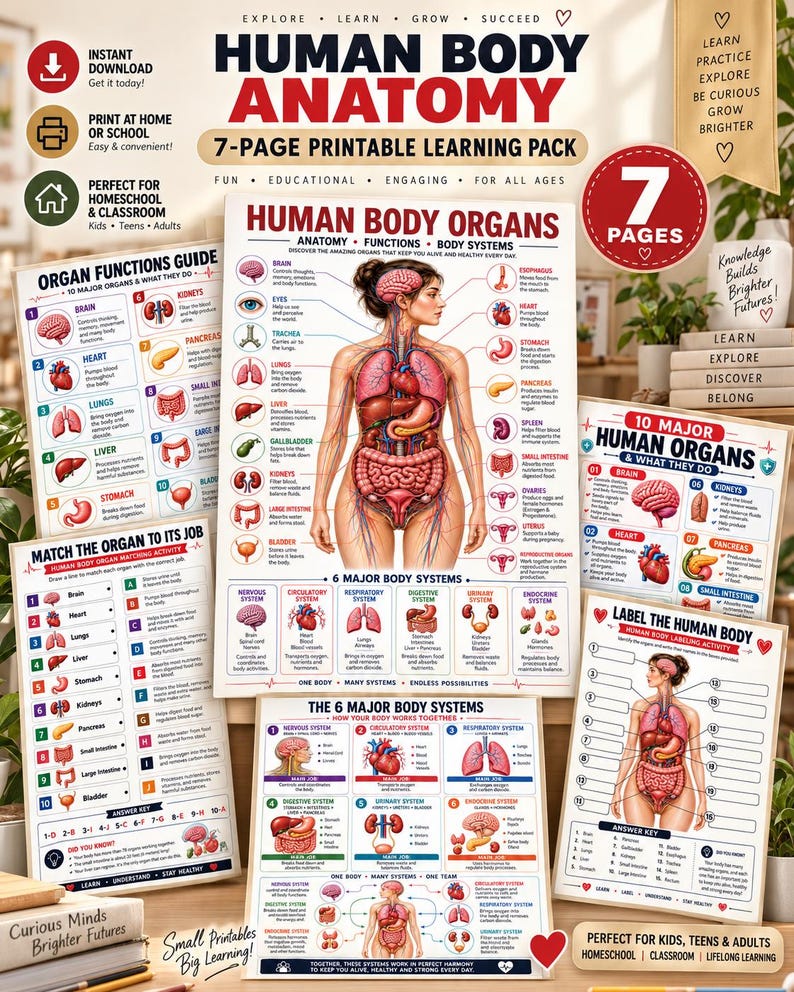
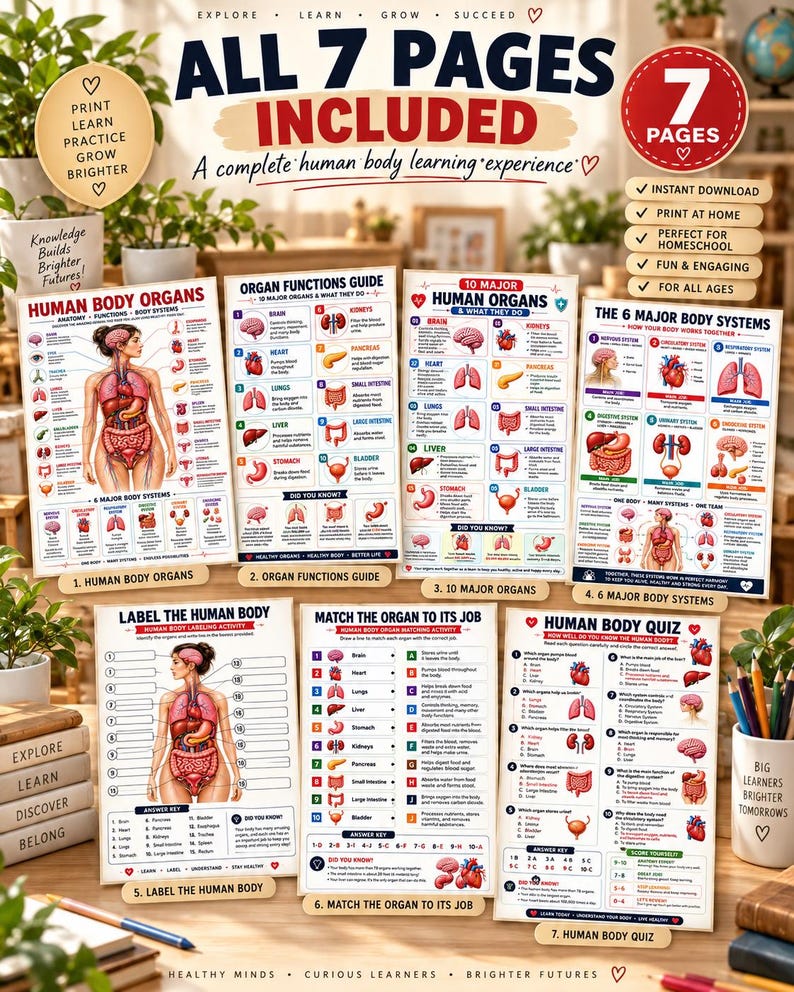
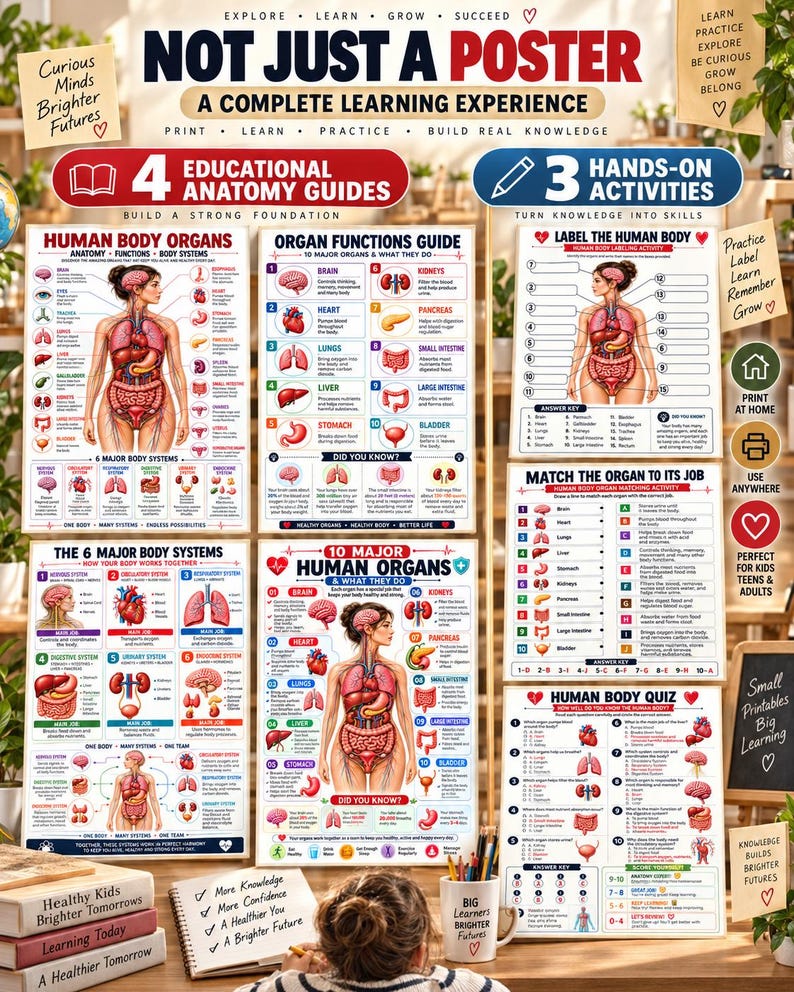
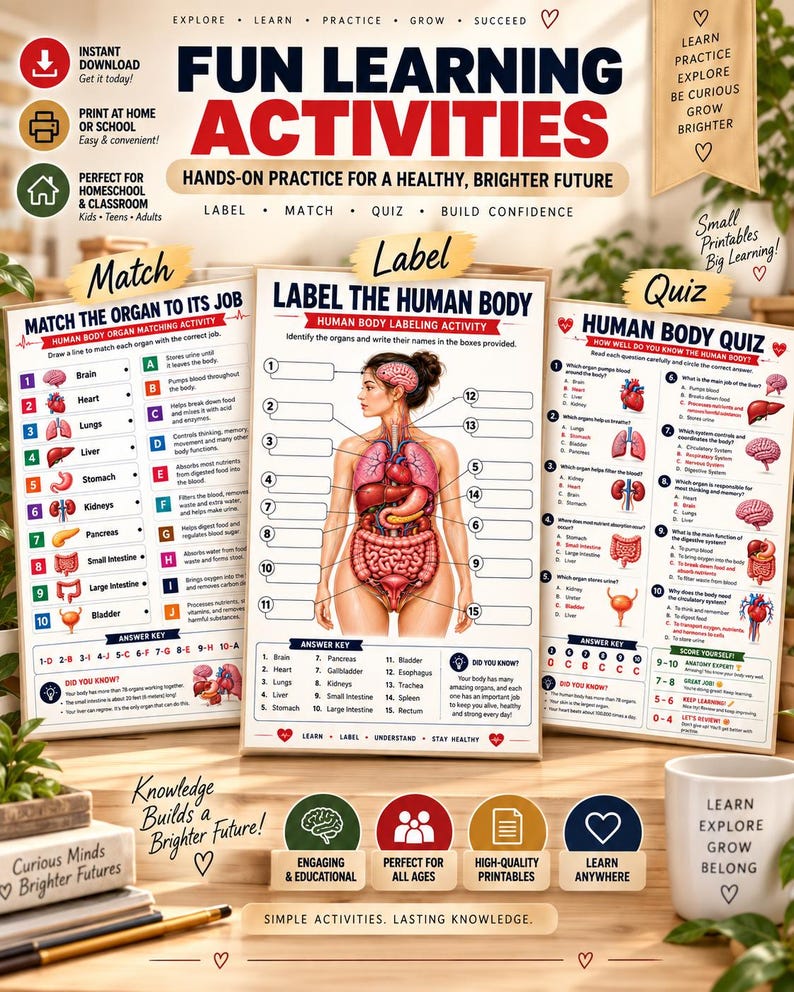
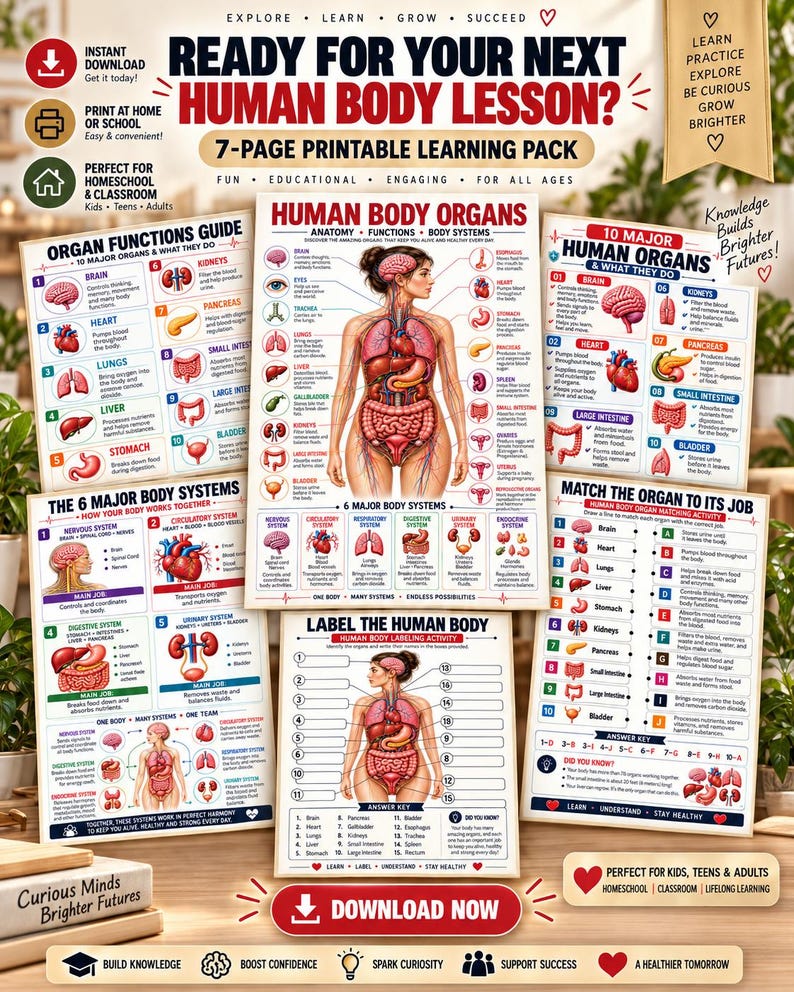
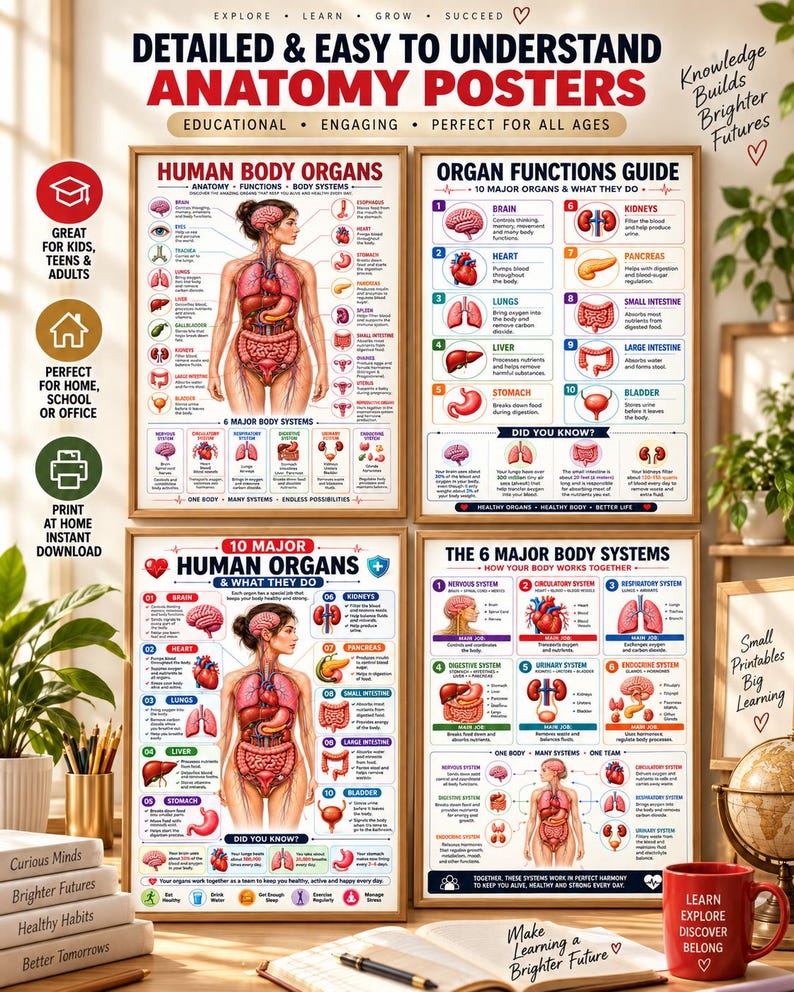
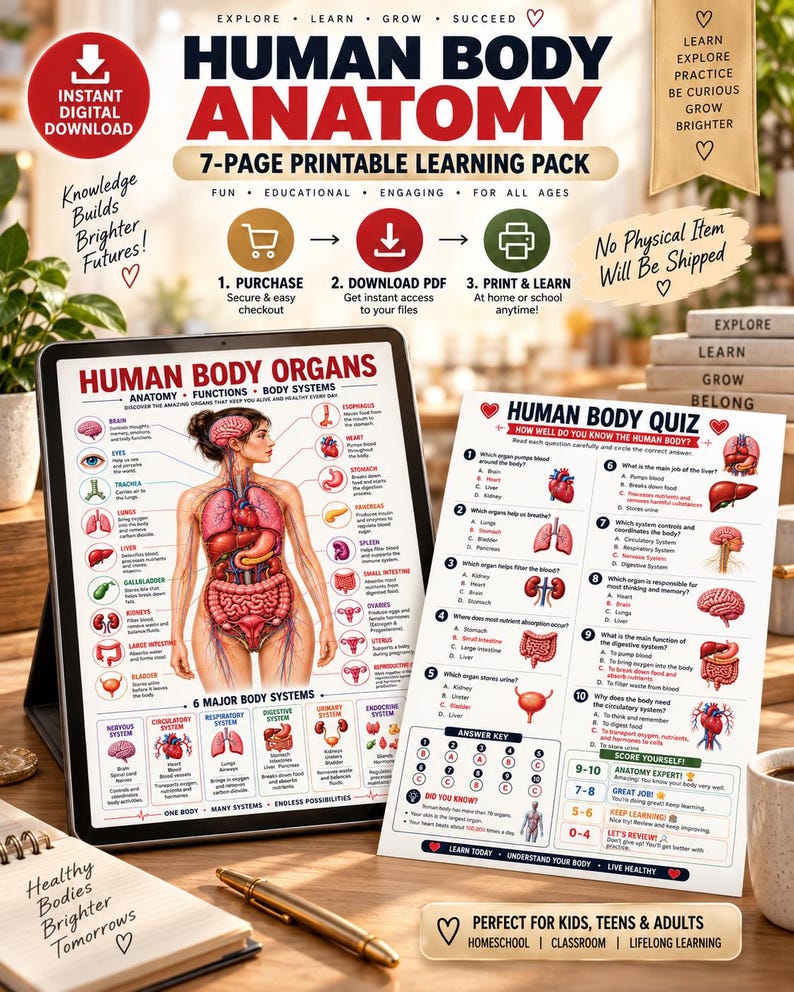
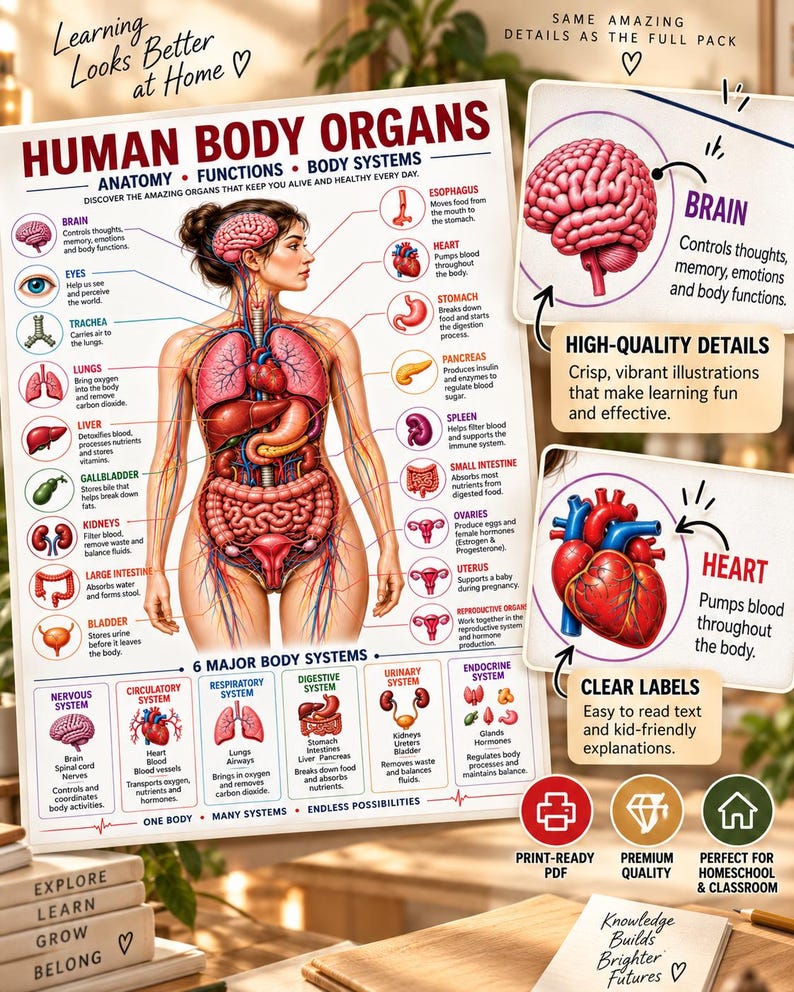
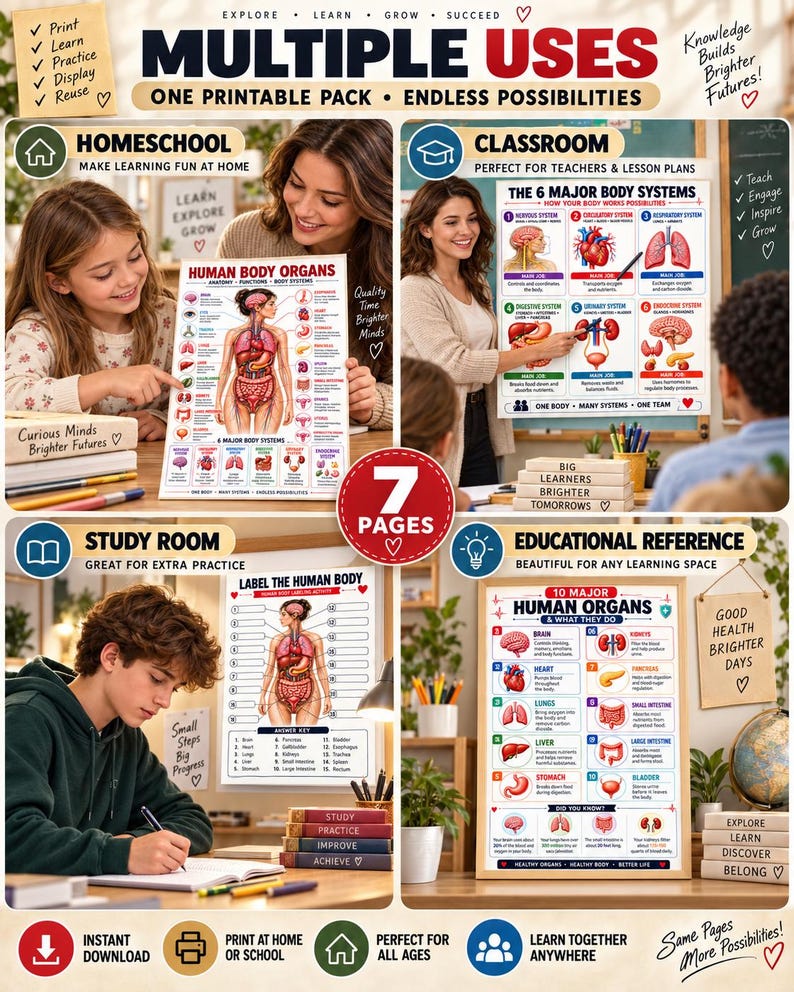
The product description identifies a female anatomy poster showing major organs, functions, healthy habits and body-system connections. A separate organ functions guide introduces ten major organs. Another section introduces six body systems: nervous, circulatory, respiratory, digestive, urinary and endocrine. The activity pages include a numbered body-labeling exercise with an answer key, a match-the-organ-to-its-job exercise, and a ten-question multiple-choice quiz with an answer key and score guide. The Etsy listing labels the digital files as three PDFs. Check its current download details to see how the pages are distributed across those files; three files does not mean three pages.
This combination gives a learner several ways to meet the same vocabulary: first seeing organ names on a visual map, then connecting names to functions, and finally recalling the information without the answers in view. That sequence can be useful in an introductory science setting, provided the adult using the resource selects the parts appropriate for the learner's age and lesson.
Start with observation, not a test
A gentle first activity is to look at the poster together and ask what the learner notices. Which organ names are familiar? Which body areas are new? You can point to the diagram, read the labels aloud and ask the learner to describe what a picture seems to show before introducing a definition. This makes the poster an opening conversation rather than a score sheet. The guide to ten organs can then add a short explanation of each job. Keep the language at the learner's level; complex anatomy terms do not become clearer simply because they appear in a colorful design.
For a classroom, consider displaying the poster where students can approach it and read the smaller labels. At home, a printed page in a binder might be easier to inspect than a distant wall poster. A tablet view may also work for a child who benefits from zooming in. The mockups are useful for judging visual style, while the actual PDF dimensions and print quality should be confirmed from the Etsy details.
Move from individual organs to systems
The six systems in the listing offer a way to connect isolated labels to larger ideas. For example, a discussion of the circulatory system can begin with the heart, while the respiratory system can begin with the lungs. The digestive system introduces another set of organs and jobs. A beginner does not need to memorize every detail at once. One approach is to choose a single system for a short session, identify a few parts, and return to the poster to see where those parts are shown.
The description also mentions healthy habits and body-system connections. Treat those as prompts for discussion rather than personalized health instructions. When a child asks a question that goes beyond the page, it is fine to say that the printable gives an introduction and to consult a trusted science source for a fuller explanation. An attractive diagram should support inquiry, not stand in for checking a fact.
Use the activities as checks for understanding
The numbered labeling activity asks learners to connect 15 organs to the body illustration. It is more informative to notice which labels cause uncertainty than to focus only on a perfect score. You can invite a learner to use the poster as a reference for the first attempt, then try again later without it. The matching activity changes the task: the learner connects an organ with a function, which helps reveal whether a name is understood rather than merely recognized. The included answer keys make these pages practical for independent review or group correction.
The ten-question quiz provides a final checkpoint, but it does not measure medical knowledge or mastery of biology. Ask the learner to explain why an answer seems right and revisit the relevant poster or guide section when a question is missed. A discussion after the quiz often adds more learning than a percentage alone. Teachers can use these pages as one station within a wider human-body unit, while homeschool families might spread them over several short sessions.
Decide if the format fits your setting
Before checkout, inspect the product gallery for an actual sample of the poster and worksheets. Are the labels readable at the size you plan to use? Do you want a female anatomy illustration specifically? Are the activities appropriate for the reading level of your learners? Does the combination of poster, answer keys and quiz match the amount of material you need? A mockup that looks good in a frame may be less useful if the writing space on an exercise page is too small for your students, so examine both the attractive cover and the functional pages.
This is a digital download delivered through Etsy; a physical poster does not arrive by mail. Check the listing for the current file formats, page previews, printing guidance and usage terms. If you need classroom copies or a particular print size, confirm that the offered license and files suit that plan before purchase. The website previews are a buying aid, and Etsy remains the checkout and download location.
A simple lesson sequence
For a first lesson, introduce the poster and let learners locate a few organs. In a second session, use the functions guide to discuss what those organs do, then link them to the six systems where appropriate. On another day, try the labeling and matching sheets. Finish with the quiz after learners have had time to revisit the visual references. This sequence uses each part of the pack for a different purpose and avoids treating all the pages as a single worksheet to finish in one sitting.
The most valuable outcome is a clearer mental map of the body and better questions about how its parts work together. The pack is designed for introductory education; it is not a diagnostic tool, and its illustrations simplify real anatomy. Pair it with age-appropriate teaching and reliable science references whenever more precision is needed. If that is the type of structured, visual introduction you want, inspect every available mockup, check the exact Etsy files and choose the format that fits your lesson.
Confirm the current files and price at your chosen checkout. This guide helps you evaluate the printable; it is not personal health advice.