THE BETTER
A chair routine can make movement feel less complicated when standing for a full session is impractical. The chair is a starting point, not a promise that every seated exercise will fit every person. This guide helps you prepare a space, choose a modest first session and decide what to record afterward.

Set up the space before choosing movements
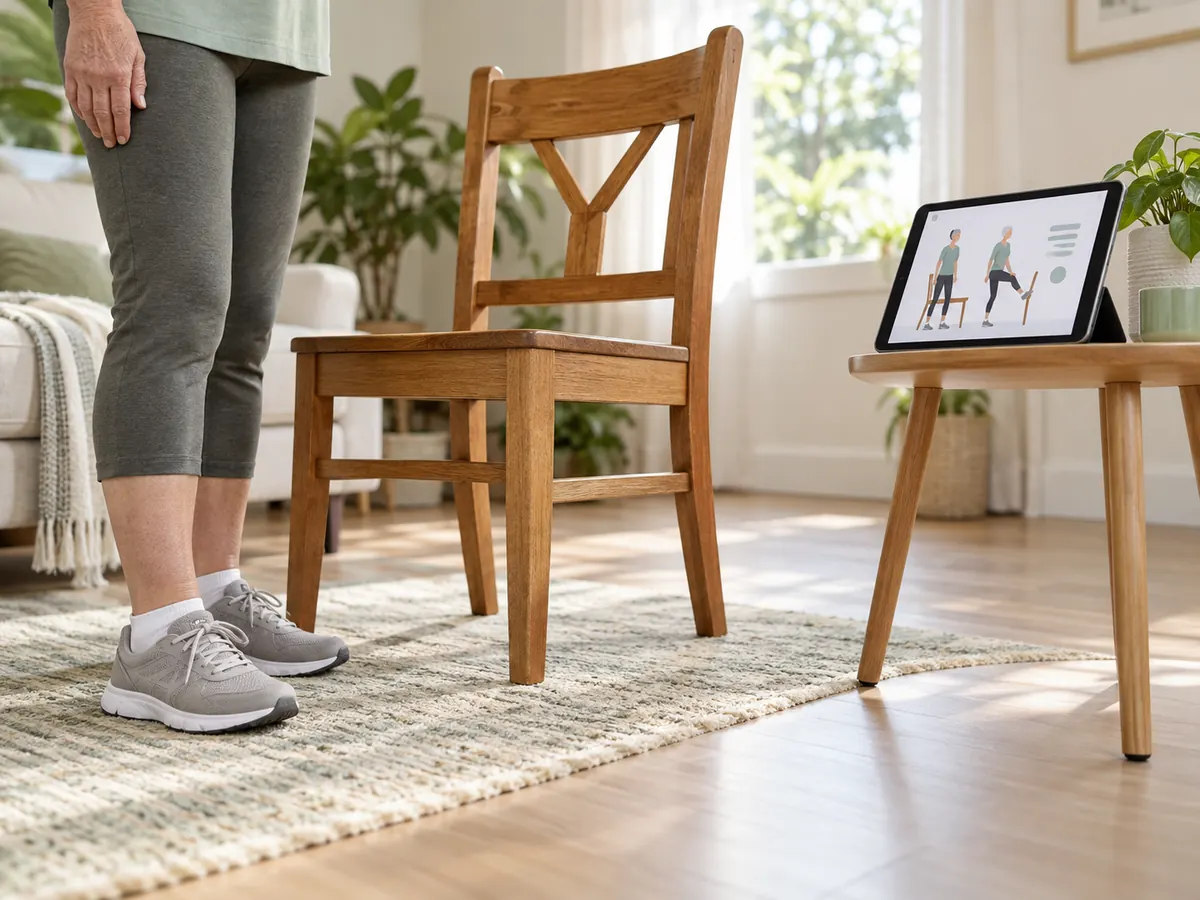
Choose a stable chair on an even floor. Move loose rugs, cords and clutter away from the feet and arms. Sit far enough from a wall or table that a comfortable arm movement will not knock anything over. A wheeled chair can move unexpectedly; if the seat shifts as you reach or turn, choose a steadier place to sit.
Put your instructions where you can read them without hunching toward a phone. A printed chart at eye level, a tablet with a larger display or a single page beside you may each work. Make sure you can reach water and can pause without feeling obliged to complete a timer.
Before you settle in, notice whether your feet can rest comfortably and whether you can get into and out of the seat without it shifting. Test the space with an ordinary arm reach while remaining seated: this is a check of the room, not an exercise. A tray table, lamp or nearby pet can suddenly become an obstacle when you start focusing on the page. Move anything in the way while you are still planning. If a helper or instructor normally assists you, keep their usual guidance in place; a printable does not replace their knowledge of your setup.
Build the first session around clarity
Pick a few movements you understand from start to finish rather than a long sequence with unclear cues. Before moving, identify where the feet begin, where the hands rest and when the movement ends. If an illustration is too small to read, enlarge the file or choose a different reference rather than guessing.
Keep the first session easy to stop. A short round is useful because it shows whether the instructions and seating arrangement work in real life. Afterward, note which directions were clear, whether anything felt awkward and which pages you might revisit. A printable schedule is a planning aid, not a deadline.
Make the printable useful during the first week
Before the first session, place a small mark beside the movements you understand and leave unclear ones for later. You might put a date on a tracker, but do not fill the entire week with ambitious targets yet. Try the layout once, then decide whether the page is readable from your chair and whether the illustrations are specific enough to guide the activity.
After a session, write two short observations: which direction was easy to follow and which part needed a closer look. This makes the next attempt more deliberate. If a printed sheet is hard to read, try a larger paper size or a screen with zoom. The right format is the one you can consult without straining to decode a small picture.
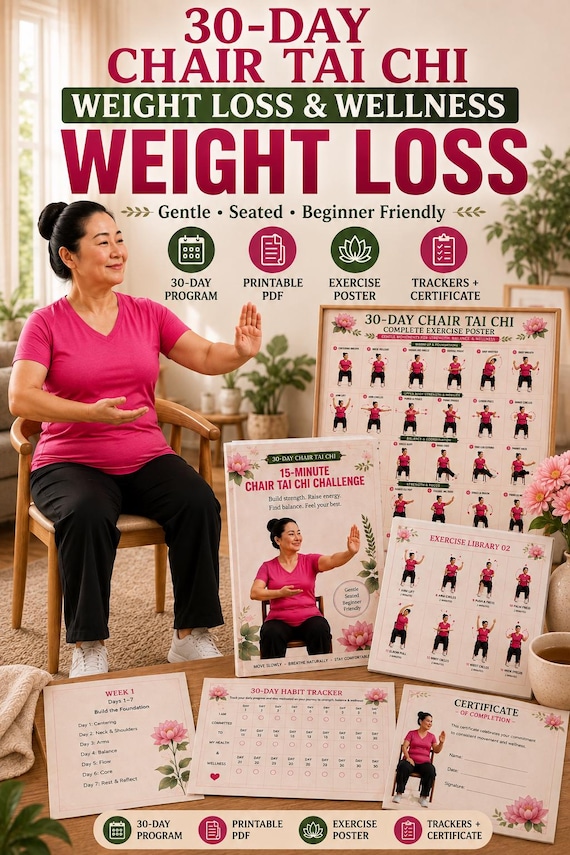
When choosing a chair-workout PDF, look past the cover mockup. Find a sample movement page, identify any planner or tracker, and confirm the actual files and paper sizes in the Etsy listing. Several attractive gallery images can be different photographs of the same chart. A careful preview helps you know whether you are buying instructions, a quick reference, or both.
A practical example of a first-week plan
Imagine you have a printable with several seated movements and a blank weekly tracker. On day one, spend a few minutes checking the chair, floor and page layout before trying anything. Identify two movements whose starting and finishing positions you can clearly explain to yourself. If a movement needs a cue the page does not give, set it aside. You do not need to complete the whole chart to learn whether the resource works for your space.
Later in the week, revisit the same easy-to-understand pages when it feels appropriate. Keep the record simple: the page used, whether the seat stayed stable and whether the instructions were readable. One person may prefer a chart taped at eye level; another might use a tablet with zoom. The example is a way to test usability, not a prescribed number of repetitions or an individual exercise program.
At the end of the week, review your notes. Did the room layout let you move without reaching around furniture? Were the diagrams clear from your seated position? Is there a question about an illustration that you should ask the seller, instructor or clinician? If the answer is yes, adjust the setup or seek clarification before expanding the routine. A tracker earns its place when it helps with this kind of decision.
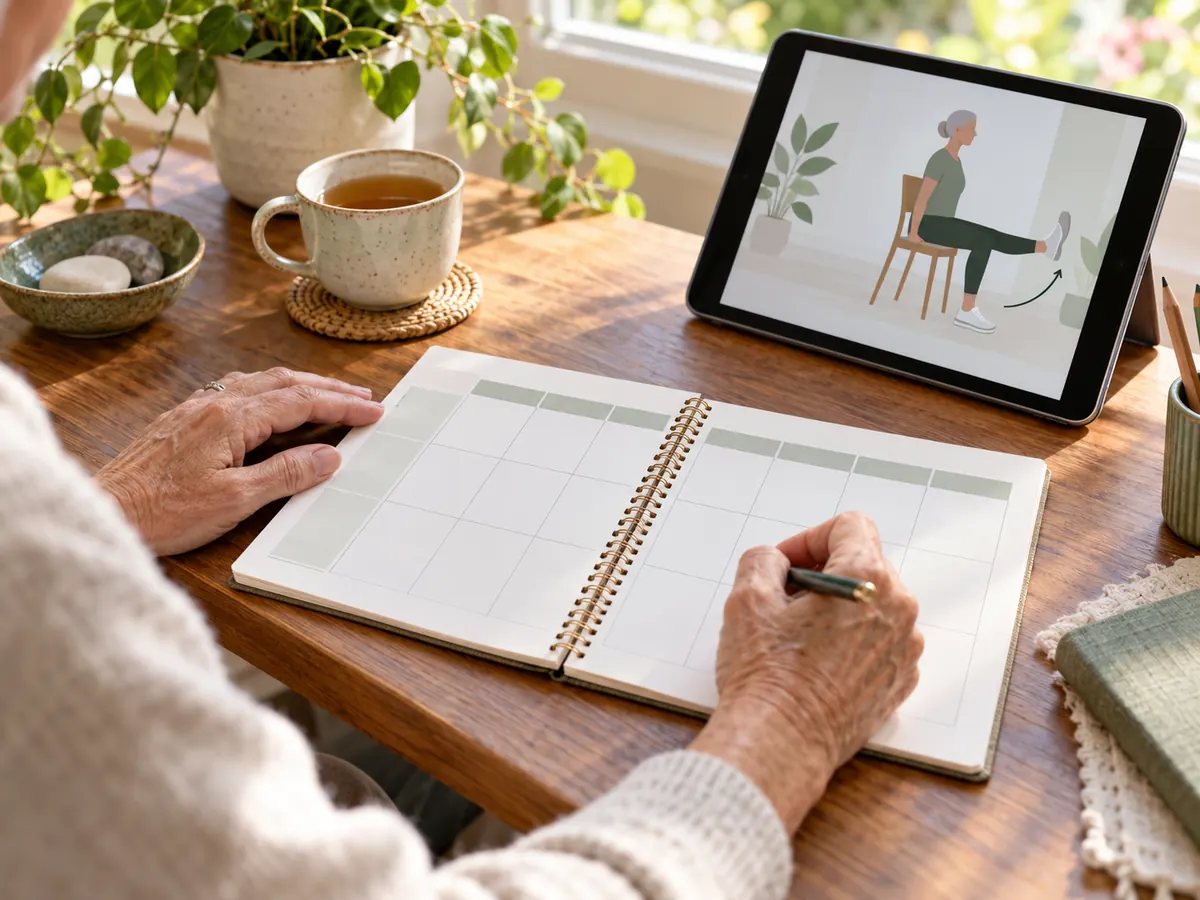
What to look for in a chair-workout download
The cover image is only a starting point. In the product gallery, find an example of a real instruction page and inspect how it shows the chair, feet and movement direction. A poster that looks beautiful in a room mockup may be hard to read at ordinary print size. A multi-page guide can provide more room for explanation, although not every page will necessarily contain a new exercise.
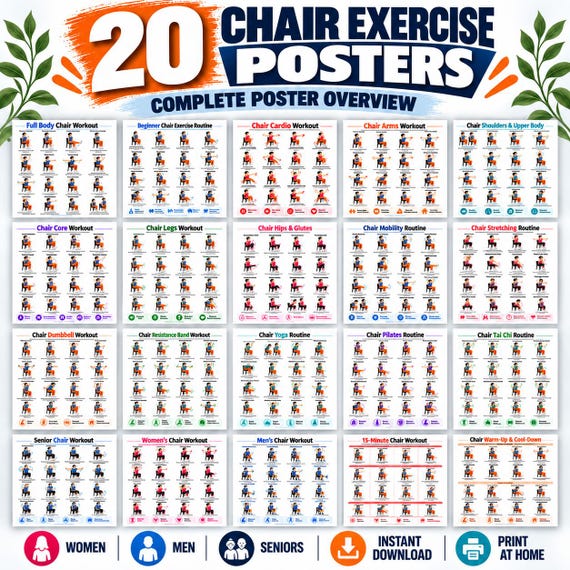
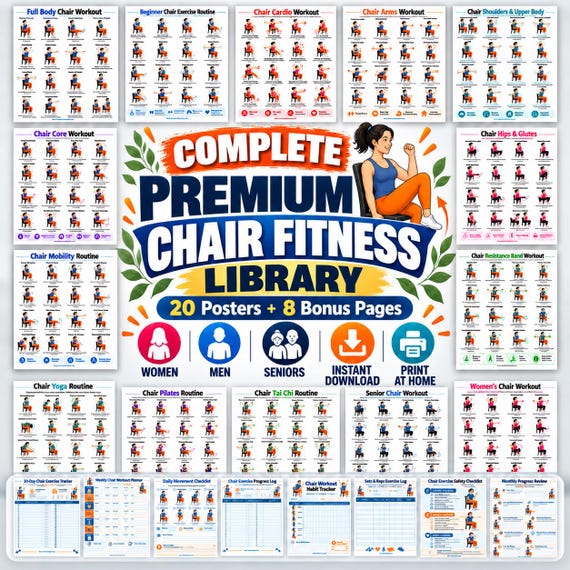
Check the file list separately from the number of gallery pictures. A listing may show the same poster in several settings, plus a calendar, a tracker and a closer view of one page. The descriptions on the live Etsy listing should tell you how many PDF or image files are included, which page sizes are offered and whether anything physical will be shipped. If those details are unclear, contact the seller before buying.
Choose the format for the job. A wall chart can remind you of movements you already understand. A booklet may be easier to study when you need to see one step at a time. A weekly planner can help you decide when to make time, and a tracker can record what happened. None of those roles makes one bundle automatically better than another. The useful download is the one whose pages answer the questions you actually have.
Know when to ask for individual advice
Seated does not automatically mean suitable for everyone. Pain, dizziness, breathing problems or a condition that changes your movement needs deserve individual attention. The National Institute on Aging advises people with chronic conditions to discuss how to adapt activity with a health professional.
If a movement feels wrong, stop and seek appropriate advice. A general article can help you organize a routine and evaluate a chart, but it cannot assess your balance, symptoms or medical history. Choose instructions you can understand and a pace you can safely manage.
Common questions before you start
Do you need a special chair? The important practical features are steadiness, a seat that lets you sit comfortably and a clear space around it. A rolling office chair or an unstable folding chair may not serve the same purpose as a solid dining chair. If you need a particular support or assistance to sit and stand, follow the advice you have been given rather than adapting a generic photograph.
Should you use a timer? Only if it helps you stop and keep track without rushing. A timer cannot tell whether an illustration is clear or an action feels appropriate. For a first attempt, the useful goal is understanding the setup and being able to pause, not chasing a number. A chart with small print can be enlarged or reviewed before you begin.
Is a seated plan a replacement for other movement? No single chart describes everything an individual needs. CDC guidance for older adults discusses aerobic, muscle-strengthening and balance activities together. The form those take depends on circumstances and professional advice where needed. A chair routine can be one manageable part of a broader week; its value is in giving you clear, usable instructions for that part.
Start with a steady chair, readable directions and a session short enough to learn from.
Further reading
These public resources provide context for the general activity or symptom guidance mentioned above.
Written for general information by The Better Plans. Exercise and wellness content cannot diagnose a condition or replace individual professional advice. The Better Plans also sells digital products on Etsy, but this article is free to read and requires no purchase. Read our editorial policy or send a correction.