THE BETTER
The best looking printable is not always the most useful one. A chart has to be legible in the place where you will use it and clear enough to answer the questions you will have mid-session. A deliberate look through the previews can save a disappointing purchase.
Judge the instruction, not the styled scene
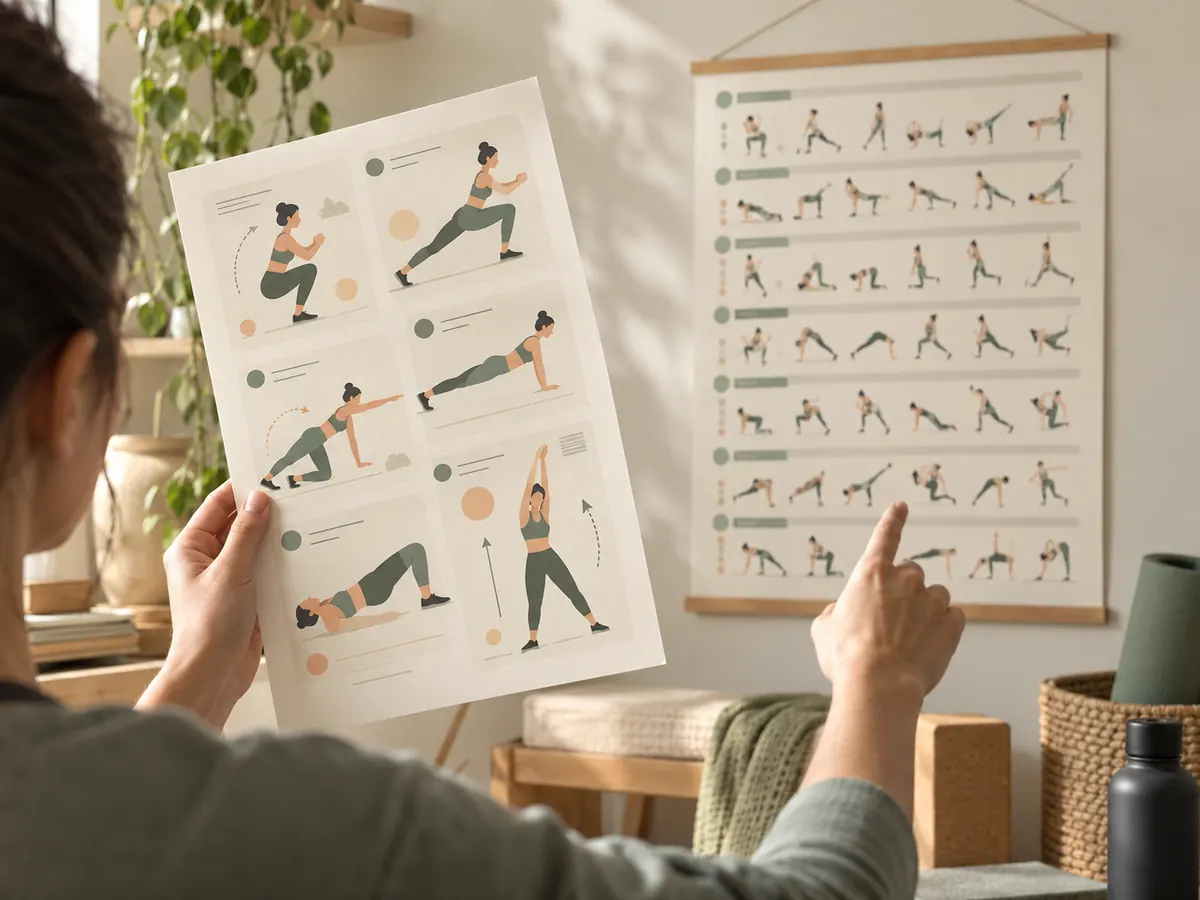
A framed poster in a bright room demonstrates presentation, not reading distance. Find a close-up of the actual exercise page and inspect the text size, illustration labels and step order. Ask whether the movement has a clear starting position and whether the page explains what to do if the layout is unfamiliar.
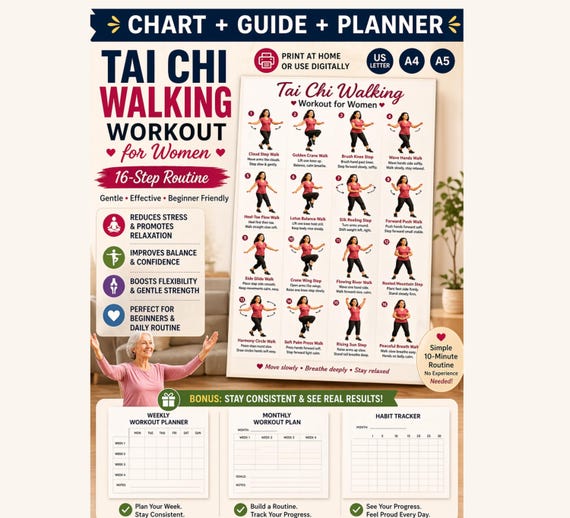
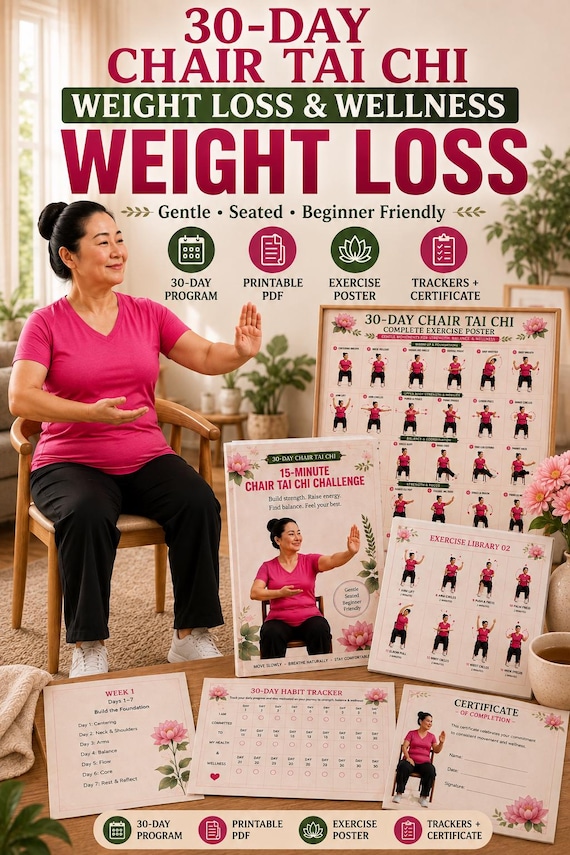
Many listings show multiple mockups of one file. Ten preview images do not necessarily mean ten delivered pages. Find the description of the download and distinguish the poster, guide, planner and tracker. If the exact file count matters, confirm it on the live listing before paying.
Match dimensions to how you use the page
US Letter and A4 are similar full-sheet choices for different printers; A5 is smaller. Consider whether you will read from a wall, a tabletop or a screen. Small type on a wall chart may be difficult to read while moving, even if it looks crisp in a full-screen gallery.
Check orientation, margins and whether colors are needed to understand the cues. A high resolution claim does not fix tiny type or unclear wording. If only one preview is legible, ask the seller about the remaining pages before purchase.

Make the decision about use
A schedule can organize sessions but cannot tell you which exercise is suitable for your circumstances. Choose the content that answers your actual need: learning steps, remembering a known sequence or recording a plan. Buying several overlapping posters will not necessarily make the routine clearer.
Keep a note of what you expect the file to include, then verify those items on Etsy. The website shows available previews and links; Etsy controls current pricing and digital delivery. If the listing changes, rely on its current file description rather than an older screenshot.
Define the one job the chart must do
A wall chart can remind you of a familiar sequence, introduce a set of positions, or simply provide a planning overview. These are different tasks. Write down which one you need before you open product galleries. If you are learning unfamiliar exercises, a poster with many small poses may be less useful than a booklet that explains fewer steps clearly.
Imagine the chart in its actual place. Will you read it from across a room, at a desk, or on a screen? A design that works on a tablet at full zoom may lose its labels when printed at A5. If the page is a reminder, perhaps only a clear title and recognizable figures matter. If it is an instruction, precise text and step order matter far more.
A decorative lifestyle image cannot answer whether the delivered file solves that job. Ask to see a close-up of a real page. If the listing never shows one, consider whether you have enough information to buy confidently or whether a question to the seller would help.

Check evidence across the gallery
Start with the hero image, then move deliberately through the other previews. Look for a full-page view, a close-up of the smallest text, and a view of any planner or extra file advertised. Note whether the images show different content or merely the same design in different frames and rooms.
Be alert to visual props. A chair, tablet, frame or notebook in a photograph may be there to suggest how a digital file could be used; they may not be included. The written list of delivered PDFs and images should make that boundary clear. If the text says three files and the gallery has ten photos, do not assume ten printable pages.
A video preview can help you understand the package's presentation, but it may move too fast to inspect a label. Pause on a still image and compare it with the description. The live Etsy listing controls the exact file count and price, so recheck it when you are ready to purchase.
Test readability and printing
Look at the smallest label and the most detailed illustration. Is the text high contrast against its background? Are arrows distinct from decoration? Can you follow the numerical sequence without skipping between unrelated parts of the page? A high resolution export cannot fix writing that is too small in the design itself.
Choose paper size for your printer and viewing distance. Letter and A4 are full-page options with slightly different proportions; A5 is smaller and convenient for a notebook but may crowd fine instructions. If several sizes are offered, verify whether the actual chart, not merely a planner, is provided in each.
If you already own a similar file, print a sample page and consider where it becomes hard to read. Use that experience as a practical benchmark while examining the new listing. You are evaluating a usable reference, not merely the sharpness of an on-screen image.
Ask the questions that prevent disappointment
Before checkout, confirm whether the product is an instant digital download and whether any physical poster will be shipped. Clarify which file contains movement instruction and which pages are for tracking. If the format matters to your setup, ask whether it includes US Letter, A4, A5 or a different size.
Think about your own need for instruction. A chart should not be treated as personal health advice. Someone with pain, dizziness or a condition affecting movement may need professional guidance before using a new routine, even when the product calls itself gentle or beginner-friendly.
A simple buying note can help: I need a page I can read at two meters, a full guide for unfamiliar steps, and one printable weekly planner. Compare each listing against those three criteria. Choosing the product whose actual files satisfy them is more reliable than choosing the one with the most polished hero image.
Save a small buying checklist before comparing listings: the exact file count, page count, paper sizes, one readable sample page and the equipment shown. Tick a field only when the listing actually supplies the answer. If a detail is missing, ask the seller rather than assuming that a lifestyle mockup represents an included file. This keeps your choice based on the resource itself.
Read one real instruction page and verify the delivered files before judging the cover.
Written for general information by The Better Plans. Exercise and wellness content cannot diagnose a condition or replace individual professional advice. The Better Plans also sells digital products on Etsy, but this article is free to read and requires no purchase. Read our editorial policy or send a correction.