THE BETTER
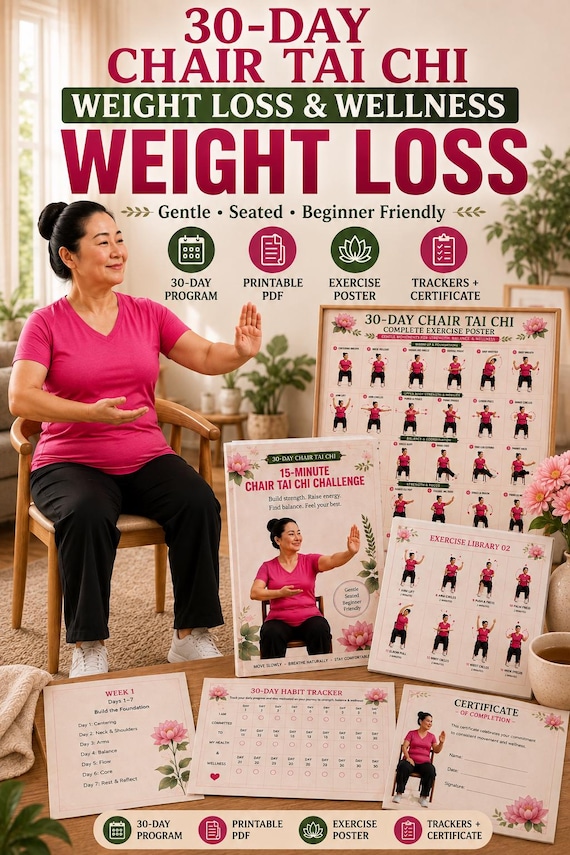
Two attractive exercise charts can offer very different experiences. One assumes a stable seat throughout; another asks you to move around a chair for support. Looking at the actual steps tells you more than the words beginner friendly on a cover.
Notice the support each page assumes
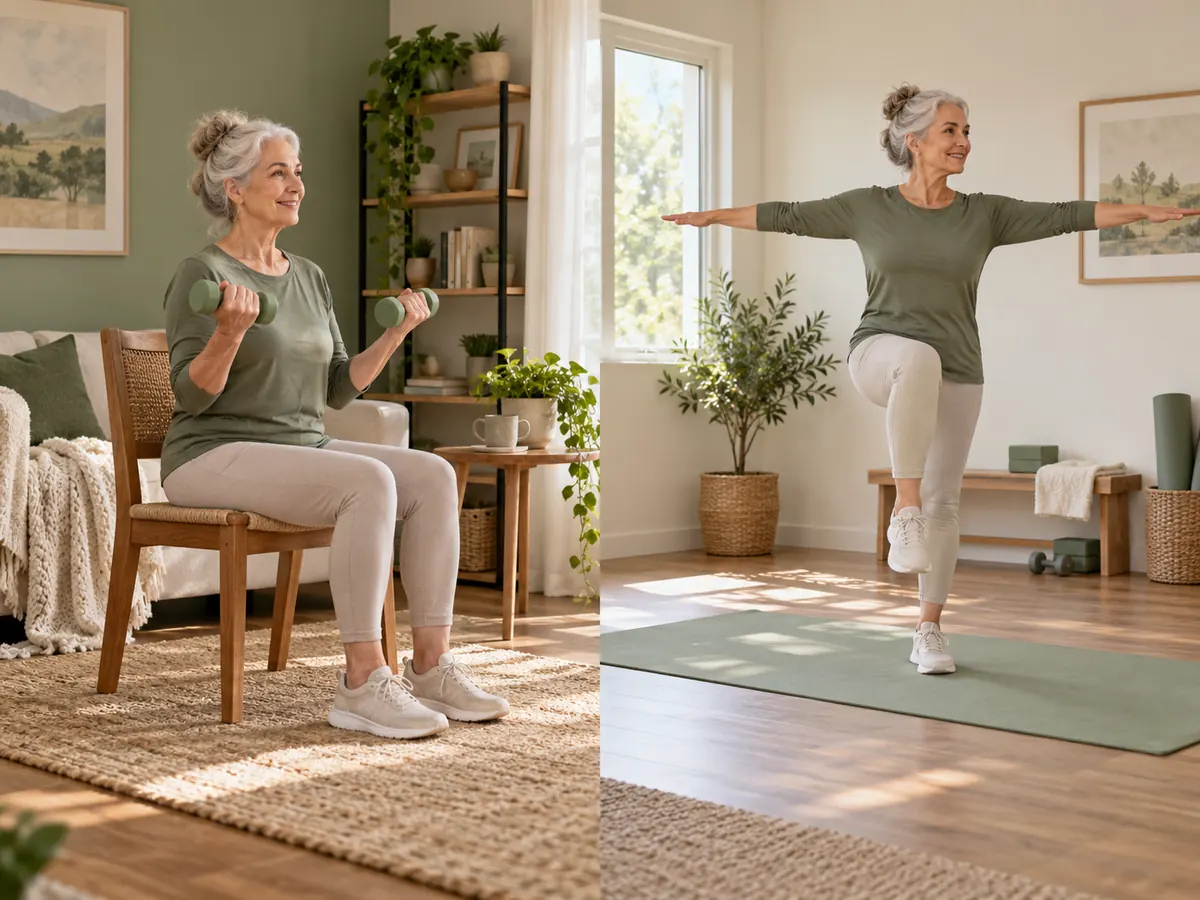
A seated page may show the back supported, the feet planted or the arms moving freely. A standing page may use a chair only as a light reference. Those details affect room setup and how closely you need to follow the pictured posture. Look at each sample movement, not merely the category label.
A standing sequence may require more clear floor space and a reliable support surface. A seated sequence still needs an appropriate chair and room for the legs. Neither format is universally easier; the right choice depends on the actual movements, your comfort and any professional guidance you follow.
Compare the material you will use
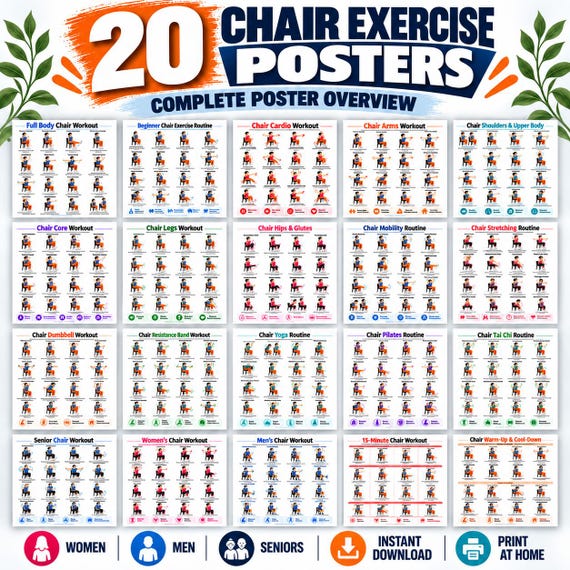
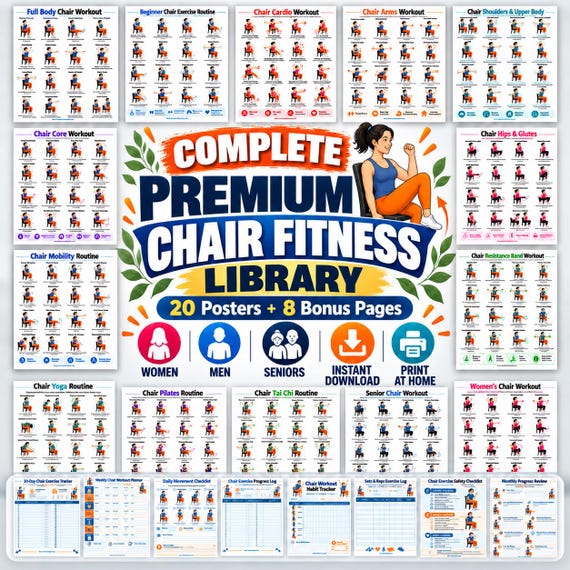
Some products include a single wall chart; others include a progression, daily planner and tracker. Ask whether you want a quick reminder or enough explanation to learn a new sequence. If the poster text is small, a multi-page guide might be more useful than an impressive looking overview.
Check the preview images for examples of instruction pages, not just a styled mockup on a desk. If a schedule has seven or thirty days, identify whether each day changes the exercise or simply gives you a place to record participation. The number on the cover is less useful than a readable, relevant page.

Make a choice that leaves room to adapt
Your routine may vary by day. A page that is easy to pause, repeat or skip can be more practical than one that pushes constant progression. For older adults, public guidance includes aerobic, muscle strengthening and balance activities; a single printable is only one possible piece of a broader activity pattern.
If you are recovering from injury, experience falls or have a condition affecting movement, discuss a suitable format with a professional. Use the printable to organize instructions already appropriate for you, rather than treating the title as a personal prescription.
Look closely at the starting position
Place the two sample pages side by side and follow their first steps in your head. On the seated page, is the back supported, are both feet on the floor, and does the diagram show what the arms do? On the standing page, is the chair meant to be held, merely nearby, or absent entirely? The answers matter because a title cannot convey the physical setup.
A standing workout may involve changing position between exercises, while a seated chart may keep the same base and vary arm or leg movements. Neither tells you how it will feel personally. If your main concern is understanding unfamiliar movements, choose whichever product explains the transition between steps most clearly. Do not infer difficulty from whether a model appears relaxed in a photograph.
If a page shows a posture you cannot identify from the illustration, zoom in on the complete file or seek instruction before trying it. An attractive thumbnail is too small to resolve details such as which leg moves first. This is particularly relevant when a bundle shows several visually similar poses in one grid.

Compare the space and equipment they assume
Imagine the exact place you would use the resource. A seated routine needs a stable, appropriate chair and enough room for the arms and legs to move without striking furniture. A standing chart might need clear floor space in more than one direction and a stable support surface if the instructions call for one. A chair placed behind a model in a styled image does not prove that it is specified as support.
Check your viewing setup at the same time. When using a standing chart, a page at eye level may be easier to consult without bending. A seated guide might work on a table or a tablet stand if the text is large enough. If looking at the chart interrupts the movement, pause to read it; the printable cannot observe whether you are following along.
A small room may accommodate one category better than the other, but dimensions alone are not decisive. A seated arm reach can require more side clearance than a simple standing position. Read the actual sequence, mark the required space, and select what fits the environment you have.
Examine the instructions beyond the cover
Look for a sample of the exercise page rather than counting mockups. Can you tell where a movement starts and ends? Does the guide explain the order in which to use its pages? A calendar and tracker can help organize practice, but they do not supply missing instruction. The product description should distinguish its chart, guide, planner and any bonus pages.
If one bundle includes a poster and another includes a multi-page booklet, compare their intended roles. A poster may be a quick reminder for movements already understood. A booklet can provide more space for cues, but only if the preview shows that those pages contain meaningful detail. Check type size in the print format you expect to use; a beautiful wall scene can disguise tiny labels.
Before purchase, list the three things you want the file to answer. Perhaps you need a clear setup, a sequence you can read at arm's length, and a printable log. A bundle that answers those points is a better match than one with more images but unclear delivered contents.
Make the choice flexible, not permanent
A person may prefer a seated page on one day and a different activity on another. The choice of printable does not need to define an entire fitness identity. Public activity guidance describes several kinds of movement across a week, including aerobic, muscle-strengthening and balance activity for older adults. One chart can be one usable reference within that broader picture.
If you have symptoms, a recent fall, or specific advice from a clinician or therapist, bring the exact illustrated page to that conversation. A professional can help interpret whether the movement is suitable and what modifications, if any, make sense. The seller can clarify file contents, but a product listing cannot evaluate your individual risk.
After using a resource, revisit the decision. Did the illustrations remain readable? Was the necessary support available? Did the page make it easy to pause and resume? Those practical observations are a sounder basis for choosing your next format than assuming that seated is always easier or standing is always more effective.
Inspect the assumed support, the actual instruction pages and how easy the format is to adapt.
Further reading
These public resources provide context for the general activity or symptom guidance mentioned above.
Written for general information by The Better Plans. Exercise and wellness content cannot diagnose a condition or replace individual professional advice. The Better Plans also sells digital products on Etsy, but this article is free to read and requires no purchase. Read our editorial policy or send a correction.