THE BETTER
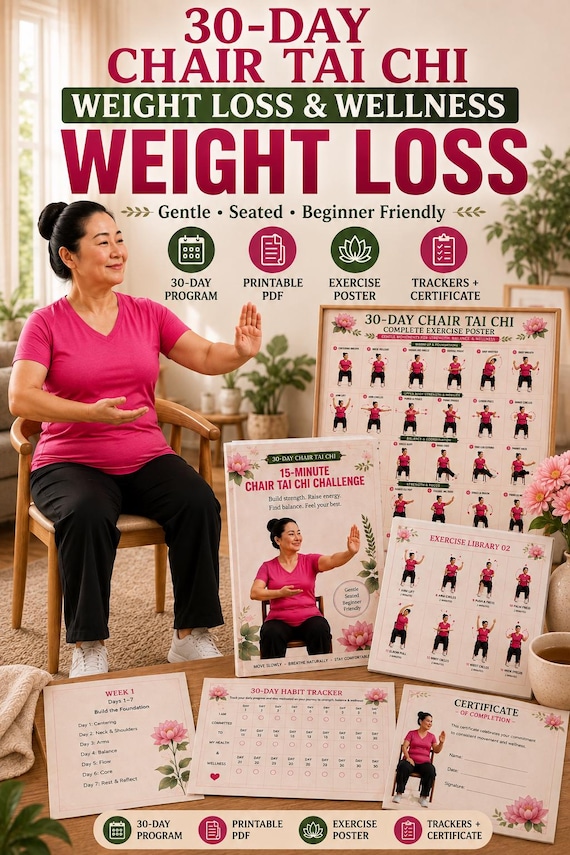
A poster and a booklet can share the same visual style but solve different problems. One helps you see a sequence at a glance; the other can make room for context and smaller illustrations. Look beyond the first mockup to decide which you would reach for.

A poster is a compact reminder
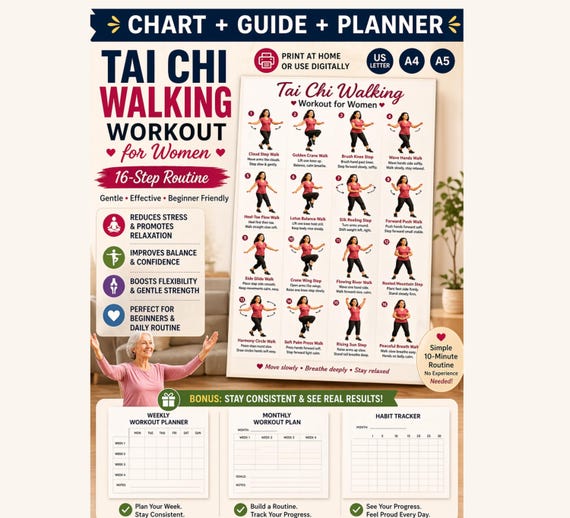
An exercise poster may present many positions on one sheet. It can work well on a wall after the movements are familiar. The tradeoff is limited space for detailed cues. Check whether the individual names, arrows and figures can be read at the size you plan to print.
A beautifully framed mockup may be larger than the actual sheet or photographed at an ideal angle. Ask yourself where the chart will go and how far away you will stand or sit. If reading requires constant zoom, the poster may serve better on a screen.
A guide can offer context
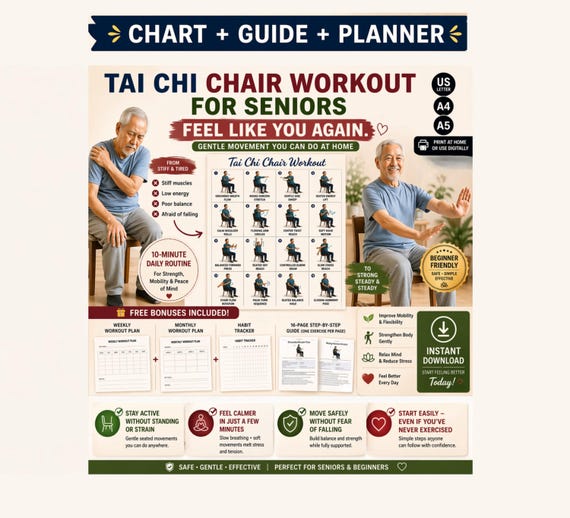
A multi-page guide may separate movements, planning pages and progress notes. Look for previews of the pages that teach the sequence rather than assuming that ten pages mean ten instruction pages. Some pages may be a cover, tracker or certificate.
The longer format can be easier to study at a desk and then use alongside a short chart. It also asks you to navigate between pages. Decide whether you prefer a quick reference, a slower read or both.

Evaluate the complete package
A listing that includes a poster, guide and tracker gives you different tools. Verify which files arrive, the print sizes and whether the product is digital only. A PNG poster and a PDF booklet may print differently, so check each format in the description.
The schedule itself does not guarantee a particular outcome. For seated movement, select clear instructions and a stable setup. If you need individualized exercise advice, a professional can help determine whether any of the pictured movements fit your situation.
Decide where you will use the instructions
A poster is designed to be seen as a whole. It can hang near a chair and remind you of a sequence you have already learned. A multi-page guide gives each movement more space for steps and explanations. Think about whether you will glance from a distance or read at arm's length.
Measure the space where the reference will live. A crowded wall, dim room or glossy surface can make a beautiful poster difficult to use. If your device is the intended surface, check whether the PDF is readable without constant zooming.
Chair-based movement still requires attention to the stability of the chair, available room and your own comfort. A format comparison cannot establish whether an exercise is suitable. If there are health or balance concerns, ask a qualified professional about the activity.

Compare instruction density
Posters often trade detailed prose for larger pictures. That is useful when you already know what an arrow means, but may be inadequate when a movement is new. Inspect a sample for the starting position, direction, breathing notes if relevant, and clear sequence order.
A guide can put one motion on each page, making instructions easier to read up close. The tradeoff is that you may need to turn pages mid-session. A table of contents, page numbers or repeated titles can reduce that interruption.
Some bundles include both formats. Check that they add different practical value rather than simply enlarging the same tiny images. Printing the poster at a larger size cannot create instructions that are absent from the source file.
Try a realistic reading test
View the preview at roughly the distance you expect to use it. If you plan to hang a chart, step back from a printed sample. Can you identify the next move and read its label without leaning toward the wall? If not, a closer guide might serve you better.
For the guide, turn two or three pages in order and see whether the drawings show transitions clearly. A sequence should not require guessing which side of the body is involved. Keep in mind that a still image may not explain timing as well as a qualified instructor or an appropriate video.
Look for a format that reduces distractions. One poster can be a good reminder after instruction; a guide can be more useful for careful reading before practice. Neither format is a substitute for feedback on your own movement.
Check the purchase details
Confirm the number of pages, print sizes and whether the purchase is a digital download. Some listings display several styled mockups of the same file; ten photographs do not necessarily mean ten distinct instructional pages. Read the item description and count what is actually included.
Check whether a video is included or merely shown as promotional media. If a video is essential to learning the sequence, do not assume it comes with a PDF purchase. The seller can clarify exactly what files arrive after checkout.
Choose the format that fits your reading habits and setting. Keep the first use simple: read the whole sequence, place the chart at a comfortable angle and pause at anything unclear. A practical reference is one that makes the next step easy to understand.
A practical choice for a first session
If you have already learned the steps, place a poster at eye level and check whether you can identify each move from your chair. If you are learning the sequence for the first time, begin with the fuller guide and read the steps in order before moving. You may eventually keep both: the guide for details and the poster for a quick reminder.
A printable format cannot correct a movement in real time. When a diagram leaves you unsure about direction, pace or support, look for appropriate instruction. Do not improvise because a small arrow looks similar to the previous one. The best purchase is the one that gives you enough information at the point you need it, at a print or screen size you can actually read.
Check a sample from the instructional pages as well as the cover. Ask whether it shows the starting position and transition, or only the finished pose. A longer file is not automatically clearer, and a concise poster is not automatically incomplete. Choose the format whose actual instructions you understand, and seek appropriate personal instruction when the page leaves an unfamiliar movement unclear.
Choose the poster for quick reference and the guide for detailed reading; verify what the bundle actually includes.
Further reading
These public resources provide context for the general activity or symptom guidance mentioned above.
Written for general information by The Better Plans. Exercise and wellness content cannot diagnose a condition or replace individual professional advice. The Better Plans also sells digital products on Etsy, but this article is free to read and requires no purchase. Read our editorial policy or send a correction.